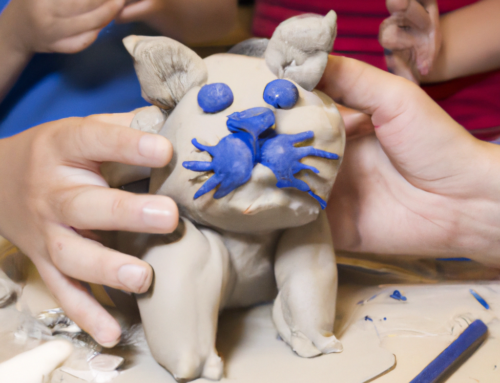
“Ceramics and Their Relationship with Technique, Symbolism and Functionality in a Jungian Approach”
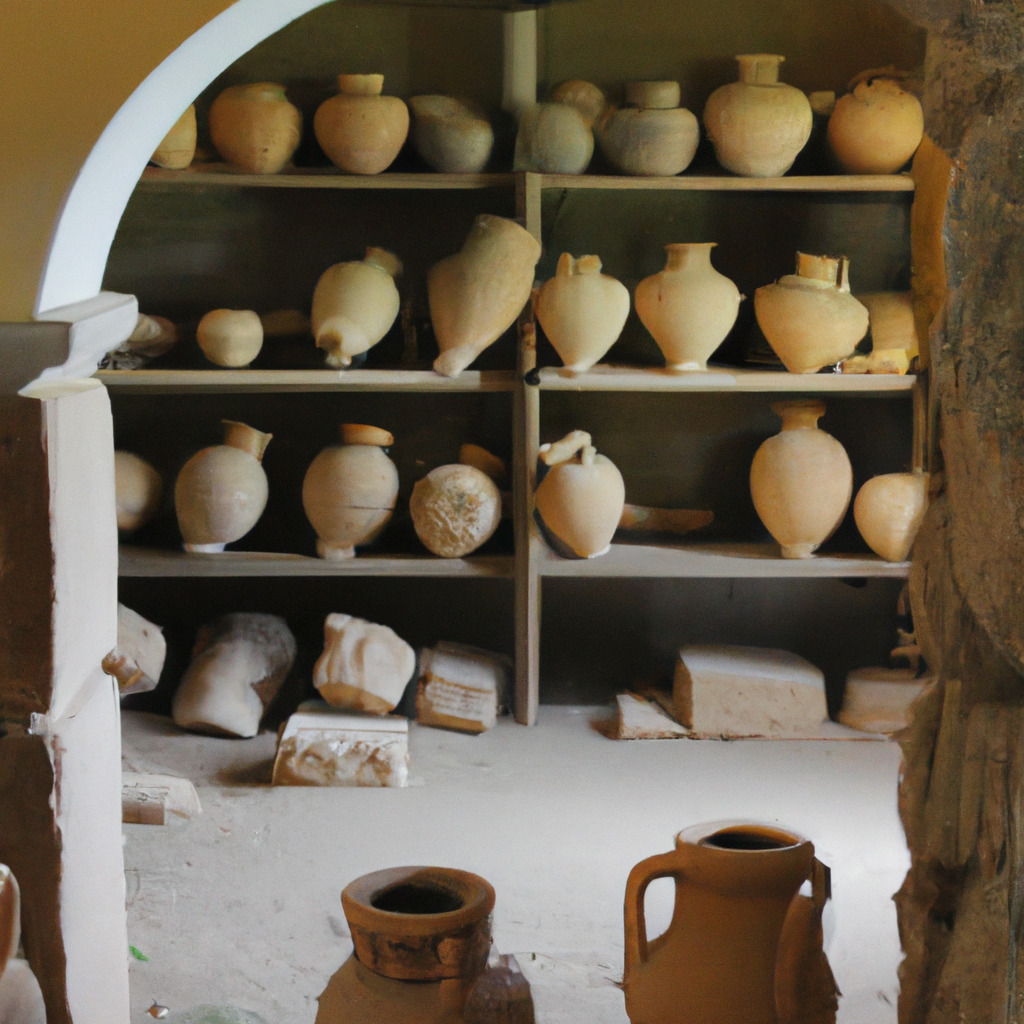
Hello everyone!
Today I am sharing an adapted version of the second chapter of my monograph, “Art Therapy through a Jungian Approach – The Technique of Care in Ceramics”.
In it, I write about ceramics and their relationship with technique, symbolism and functionality.
I hope you enjoy it!
Definition
Let us begin with two definitions of ceramics.
Rhodes defines ceramics as “the art of making permanent objects of utility and/or beauty by heat treatment from earthy raw materials”.
After firing, clay's chemical structure is irreversibly altered, so it can no longer be recycled. What was previously fragile and brittle also becomes highly resistant and durable. With this human-made material, we create pieces that follow a civilisation's particular aesthetic standards and are often intended to fulfil a specific practical purpose.
According to the etymological dictionary, the word leads us to the following meaning: “among the ancient Greeks, a fired-clay vessel at the table”.
This definition reinforces Rhodes's interpretation of clay transformed by fire, adding its natural setting: the domestic environment. We cannot think about ceramics without considering their utilitarian, aesthetic and symbolic functions, and it is this relationship that we will discuss below.
The Existential Basis of Ceramics
For Rawson, contemporary assessments of ceramic works rely on purely aesthetic or functional criteria. Both approaches, however, are inadequate: functionalism alone cannot explain the countless forms and variations of pieces that serve the same purpose. Aestheticism, on the other hand, concentrates on the pure beauty of a ceramic work and overlooks its enduring connection with its utilitarian nature.
The author observes that, from the earliest times, ceramics have been used to improve human living conditions. According to him, despite humanity's many uses for ceramics, from funerary urns to statues of gods, containing food and drink has been the most important, and “the constant relationship with food has probably played the most vital role in giving ceramics their particular symbolic character”.
From the uses given to ceramics throughout history, we can see that this material has consistently served humanity in practical ways. Despite its many uses, acting as a vessel for food and drink has been its raison de vivre. Alongside this essence, however, we also find subjective values assigned to ceramics.
We can explain these symbolic contents in ceramics through the transformation of a natural material, clay, into something deliberately made. As a product of creativity, ceramics gave people a sense of self-realisation which, from their origins in the Neolithic period, established a distinction between human-made things and the rest of the natural world. Ceramic objects therefore have symbolic value because they are a means of expressing their makers' inner contents.
For their makers and users, ceramics have always offered a kind of revelation in two directions: first, from people to themselves as independent creative and working agents; and second, from the world to people as a medium imbued with 'reality' that they are capable of transforming. A pot therefore 'contains' both the reality of its materials and process, and the inner realities of a person's sense of identity in relation to their own world of meaning.
Ceramics' simultaneous utilitarian and symbolic value has led to its use in both secular and religious spheres, as Neumann emphasises:
If we find sacred vessels not only in Greek Eleusis and among the Roman Vestals, but also in South America, specifically Peru, and in Dahomey in Africa, under the particular care of priestesses, then this institution rests on the fundamental symbolic and sociological significance of the pot.
For millennia, ceramics have accompanied our habits and been present in our homes, temples and workplaces. They are the anonymous witnesses to everyday life. Their simple origins, permeated with symbolic values, have given them a place in almost every human activity, and a distinctive aesthetic has emerged from this relationship with humanity. This may make ceramics better able than other forms of creative expression to bridge the gap we feel between art and everyday life.
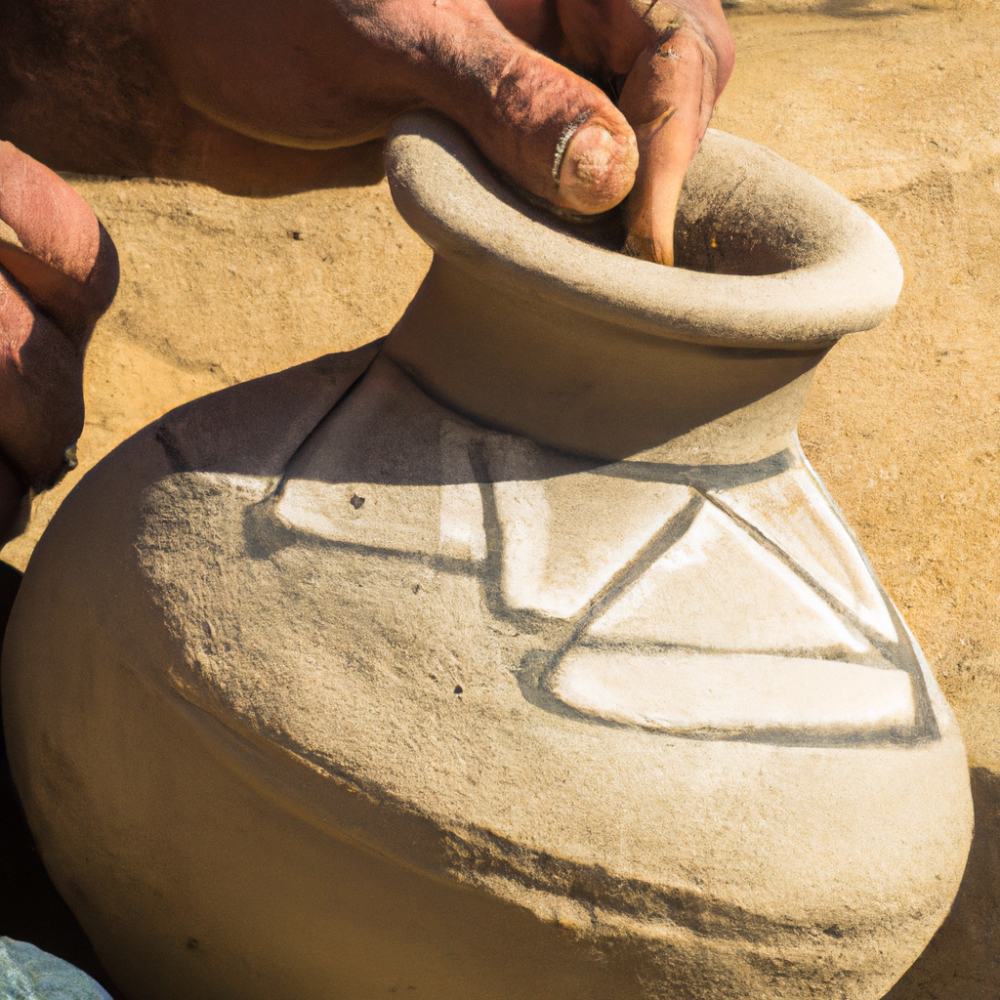
Technique in Ceramics
The distinction people established between themselves and nature, which made ceramics possible, for example, emerged through technique. According to Ortega y Gasset, technique arises as a means not only of meeting basic needs shared with animals but also of providing for human well-being: it is “the vigorous reaction against nature or circumstance, a reaction that creates a new nature between nature and humanity”. In this movement to create their own nature, people seek mastery of elements such as earth and fire, making ceramics possible. Ceramics, in turn, fulfils its role as utensils, allowing people to live within their own reality, save effort and time, and secure their well-being.
According to Ortega y Gasset, there is no humanity without technique, but the way people relate to it has changed over time. When people discovered ceramics through what he calls the technique of chance, they were unaware of technique as such. Almost entirely immersed in nature, they experienced an “aha!” moment when discovering a new way of interacting with things, without recognising their own invention. There was also no specialisation: everyone in the community shared the same tasks. Ceramics thus emerged through technique operating by chance, and gradually came to be used more consciously in an effort to gain greater control over the elements involved in production.
Rhodes points out that clay, though abundant, is a “temperamental” material. It is malleable when wet, but becomes fragile and brittle as it dries; during firing, it shrinks, creating all kinds of problems for the potter. The English potter Bernard Leach describes firing as a battle: flames have their own whims, and the potter must constantly manage them to keep losses to a minimum. De Waal describes visiting an old ceramic production site near the Chinese city of Jingdezhen, a major porcelain-producing centre since ancient times:
And beneath our car tyres, among the weeds, lie broken saggars, brown and black: rough earthenware containers with high sides, twelve or fifteen centimetres across. And shards, pale porcelain half-moons in the red earth. I pick up the first one: the base of a twelfth-century wine cup, a slender, pointed stem supporting a cracked bowl no wider than a thumb. It is unbelievably thin. And not white at all: it is a pale, watery celadon blue, with a web of brown cracks where centuries in the soil have stained it.
This is my grail moment, and I hold it reverently. Everyone laughs at me and my ridiculous epiphany, because further on there is a whole hillside of shards: a landscape of breakages, a dictionary containing every possible way a pot can go wrong. This is no discreet, if neglected, heap of debris. On the contrary, it is an entire landscape made of porcelain.
For centuries, potters sought to mitigate the problems arising in the making of their pieces, accumulating knowledge largely through trial and error and building a body of technical expertise that has been passed down to the present day.
Much of the ceramic production process we use in our studios today dates from a period characterised by what Ortega y Gasset called the “technique of the craftsperson”. Although people saw themselves as distinct from nature, they had a deep and sustainable interaction with it, drawing inspiration and taking only what they needed. At this stage, tools complemented people, and machines did not act as devices of creation: people were the protagonists of production. They were responsible for both conception (mechané) and execution, with no division between the two.
From this period onwards, we can see the specialisation of activities and their techniques. There were blacksmiths, shoemakers, potters and other craftspeople. Although technique was used, it was not understood as an entity in its own right. Instead, certain people were thought to possess natural abilities for particular tasks. Although craft was seen as distinct from the natural world, the craftsperson's technique was fixed, belonging to their nature. The Greek term techné arose from this “fixed system of the arts, as techniques were known among the peoples of that time”.
Knowledge within a particular craft was transmitted through a master–apprentice relationship. In this model, knowledge was passed on to the apprentice as they carried out tasks in the workshop. Apprentices began with the heaviest work, such as cleaning and gathering clay and firewood. Only after mastering these tasks did they learn forming and glazing, considered the more prestigious stages of ceramic work. Only after a long period under the master's strict supervision could apprentices develop their own language and become master potters themselves.
An example of the relationship between master and apprentice appears in Park's novel “Por um simples pedaço de cerâmica” (A Single Shard). Set in a village of potters in twelfth-century Korea, it tells the story of an orphan boy, Orelha-de-pau, who is fascinated by a local potter's work and offers to work for him. Orelha-de-pau carries out the tasks his master gives him. These are demanding jobs that leave the boy dissatisfied, since he longs to learn wheel-throwing techniques. His challenge is to earn his master's trust by obeying the strict rules of apprenticeship and securing his place as a potter. Through humility and persistence, he gradually ceases to be a passive participant and gains independence as a maker.
The Modern Question of Technique
Today, science can explain the chemical and physical processes involved in ceramic production in great detail. This has led to technical refinement, especially in industry, with the aim of reducing losses and maximising production efficiency. Studio potters, however, view the involvement of technical rationalism in their work with some suspicion. As we have seen, the existential basis of ceramics lies in the subjective connection between objects and the way of life of their makers or users, while science, oriented more towards an objective, materialist perspective, distorts that relationship. Rawson writes that “Although ceramics must be based on some form of technology, good ceramics always escape the tyranny of that technology”.
We now live in a phase that employs what Ortega y Gasset calls the “technique of the technician”. In this period, people “live with faith in technique, and in technique alone”. It becomes so important to us that we can no longer set limits to it. Its power to do anything empties our lives of meaning: because we can imagine anything, we lose sight of our own existential priorities. This dependence on technique also distances us so far from nature that we can no longer live within it and lose awareness of its existence.
With the invention of the machine, people also become supporting actors in manufacture. When they do take an active part in production, a separation exists between the technician's work, that of the engineer, and the worker's. The technician, moreover, devotes themselves to invention and, “unlike primitive people, knows before inventing that invention is possible; that is, before possessing a particular technique, they possess technique itself”. From then on, “techniques are merely a posteriori manifestations of the general human function”. The intellectual method arising from this reasoning, technical rationalism, is essential to establishing technique as an autonomous activity, but may leave inventors adrift in the very boundlessness of their imagination.
Conclusion
To summarise, the existential basis of ceramics brings together functional, symbolic and aesthetic dimensions. Although clay is a natural material, ceramics, as a human invention, allowed people to view their work from a perspective distinct from the natural world. This differentiation also enabled them to see their work as a reflection of the realities of their inner world. Ceramic objects arose primarily for everyday use. From their beginnings, they have thus had specific functions while also expressing their makers' subjective and symbolic values. Beyond their practical purpose, they can therefore be understood as objects charged with symbolic content. A distinctive aesthetic developed from this relationship to reflect that interaction.
On the question of technique and creative freedom, we commonly call a potter's workplace a “studio for handcrafted ceramics”. This description brings together two distinct forms of making. The studio evokes a space where the artist enjoys complete freedom of creative expression; craft, as we have seen, has strict rules for passing on technical knowledge and, in some ways, limits makers' creativity. This reveals a duality and raises questions about ceramics' technical foundations and creative freedom within the medium. The dominant position of technique today also places potters in a position of distrust towards it.
Ceramics is thus a field full of dualities: freedom and tradition, technique and creativity, symbolism and functionality. How we might reconcile these tensions and draw on them remains a fertile area of investigation for the contemporary ceramic artist.
Sources:
- Ortega y Gasset: Meditação sobre a Técnica
- Edmund de Waal: O Caminho da Porcelena
- Erich Neumann: A grande mãe: um estudo histórico sobre os arquétipos, os simbolismos e as manifestações femininas do inconsciente
- Philip Rawson: Ceramics
- Linda Sue Park: Por um simples pedaço de cerâmica
- Daniel Rhodes: Clay and glazes for the potter
About the Author: Gustavo Assis

Related Posts