The Expanded Field of Ceramics: Exploring New Frontiers
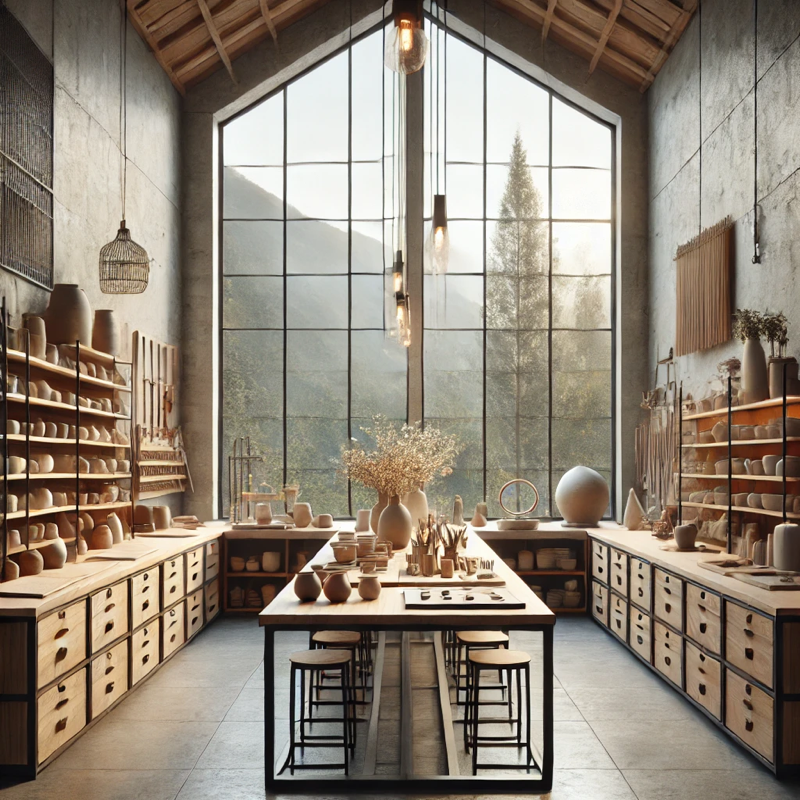
Ceramics have always been part of human history, both as utilitarian objects and as artistic expressions. Yet the field has been undergoing a radical transformation, incorporating new technologies, hybrid materials and interdisciplinary practices. Inspired by the concept of the expanded field proposed by Rosalind Krauss, my article “The Expanded Field of Ceramics: Bridging Artistic Practices from Past to Present” explores how ceramics have moved beyond their traditional boundaries to become a dynamic medium for performance, installation and sustainable practices.
From Tradition to Expansion
Historically, ceramics have been associated with fired clay, a material that acquires durability and strength through firing. Advances in materials science, however, have challenged this classical definition, opening up new approaches such as the use of unfired clay, concrete and hybrid techniques. This movement not only redefines what we consider ceramics but also broadens their impact on contemporary art.
Ceramics and Contemporary Art
In recent years, many artists have explored ceramics in contexts beyond the traditional object. The artist Anna Maria Maiolino, for example, uses clay to record gestures and bodily movements, highlighting the relationship between materiality and expression. Adrián Villar Rojas incorporates unfired clay and concrete into his monumental installations, addressing themes such as erosion and temporality. Other practices include performances that explore clay's malleability, such as the work of Miquel Barceló and Josef Nadj, who use clay as a living material in constant transformation.
Natural Building and Sustainability
Another aspect explored in the article is the intersection between ceramics and sustainable architecture. Natural building, which prioritises materials such as raw earth, hyperadobe and cob, shows how ceramics can be both an artistic medium and an agent of environmental change. Artists such as Celeida Tostes explored this relationship in sculptures combining clay and cement, while collective practices, such as community work parties for earth building, reinforce the idea of ceramics as a collaborative, community-based medium.
Paths towards the Future
The expanded field of ceramics points towards new horizons in which art, technology and sustainability intertwine. Some promising directions include:
• Emerging technologies: Ceramic 3D printing, computational design and digital modelling are expanding the possibilities for making and experimentation.
• Sustainability: Ceramics can play a fundamental role in ecological building and the development of new materials with a low environmental impact.
• Interdisciplinarity: The dialogue between ceramics, performance, video and architecture continues to generate new forms of expression.
• Ephemerality and transformation: Exploring clay's fragility as a metaphor for impermanence strengthens connections with contemporary philosophical and ecological concerns.
Throughout the article, I highlight how ceramics remain relevant by continually reinventing themselves, crossing boundaries and challenging conventions. This expanded field not only strengthens ceramics' expressive potential but also opens up new perspectives for their application in the contemporary world.
What do you think about these transformations in ceramics? How do you see the future of this medium? Leave a comment and let's continue the conversation!
References:
About the Author: Gustavo Assis

Related Posts