
Chawan History in Japan – Part I
Hello!
Chawan is the Japanese word for tea bowl. In East Asia, tea is traditionally drunk from bowls rather than cups, and these pieces have long been essential utensils for tea ceremony masters and enthusiasts.
Today I will explain how tastes in tea bowls have changed in Japan over the centuries.
15th century
The supremacy of Karamono in the Ashikaga era
Tenmoku is a chawan covered in black glaze, with some of the clay colour showing at the foot (kōdai). The name Tenmoku (literally, “eye of the sky”) comes from Mount Tianmu in the Chinese province of Zhejiang, where Zen Buddhist monks practised. Japanese monks also made pilgrimages there and brought these chawans back to Japan, along with the custom of drinking tea. During the Muromachi era, even among the highly prized Karamonos (the Japanese name for art objects made in China), pieces from the Jian kilns in Fujian Province, known as Kensan (the Japanese pronunciation of Jian Zhan, or Jian bowls), were considered the most valuable of all.
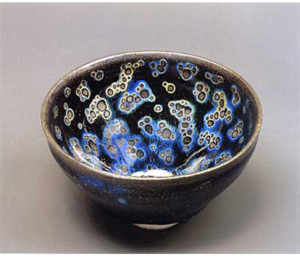
Yōhen Tenmoku (Inaba Tenmoku). Jian ware, China. Southern Song dynasty, 12th or 13th century. Seikado Museum, Japan.
Chemical reactions during firing produce bright spots in seven colours and pale blue iridescence in the black glaze, known as yōhen (literally, “brilliant change”). Only 3 examples remain in the world, all of them in Japan. Their astonishing, almost awe-inspiring beauty attracted the attention of tea ceremony practitioners.
16th century
The taste for Kōrai chawan
Following the influence of Joo Takeno, an influential tea master and well-known merchant during the period known as Sengoku, in 16th-century Japan, the austere concept of “wabi” flourished, along with a taste for chawan that had not originally been intended for drinking tea. These modest pieces were made on the Korean peninsula. Whether they were considered beautiful depended on the aesthetic principles used to select them, and these choices have been passed down through generations of tea masters. At the beginning of the Edo era, orders began to be placed with Korean makers for chawan appreciated by tea ceremony practitioners.
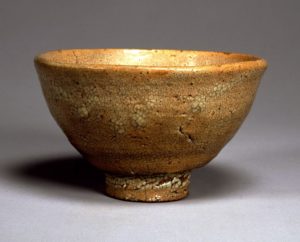
Ōido chawan. Height 9.1 cm; width 15.0 cm; foot 5.5 cm. Joseon period, 16th century, Korea. Tokyo National Museum.
Ido is a type of Kōrai chawan, the Japanese term for art objects made in Korea. Within this category, particularly large bowls are called ōido (large Ido). Their distinctive features include the loquat colour of the glaze, their generous shape and a bamboo-knot-shaped foot (take-no-fushi). Kannyu (cracks in the glaze) and Kairagi (the wrinkling of the glaze around the base) are appreciated as keshiki. This Japanese word literally means “landscape” and refers to the individual characteristics of a ceramic piece, such as the effects of flames in the kiln or the way the glaze has run.
The story continues next week! See you then!
About the Author: Gustavo Assis

Related Posts

Gustavo, can you provide me with an email address so that I can send you pictures of the tea bowl I acquired from my Japanese uncle. I was told it was an Edo period piece but I would love to authenticate its origin, or at least learn more. My research shows it has many features of a Joseon period Ido bowl. It has an Oido shape, 14.28 cm diameter, Kairagi base and Kannyu cracks in the glaze. The unglazed portion of the bowl are not dots but a ring, and there are finger marks from the potter, thumb inside and three fingers on the outside. It came in a wooden box with a label.
Kind regards,
Jimmy on Cape Cod
My e-mail can be found in contact (contatos) section on this website.