
Art · video performance
Barro e Pele
Clay and Skin — Between Gesture and the Fall
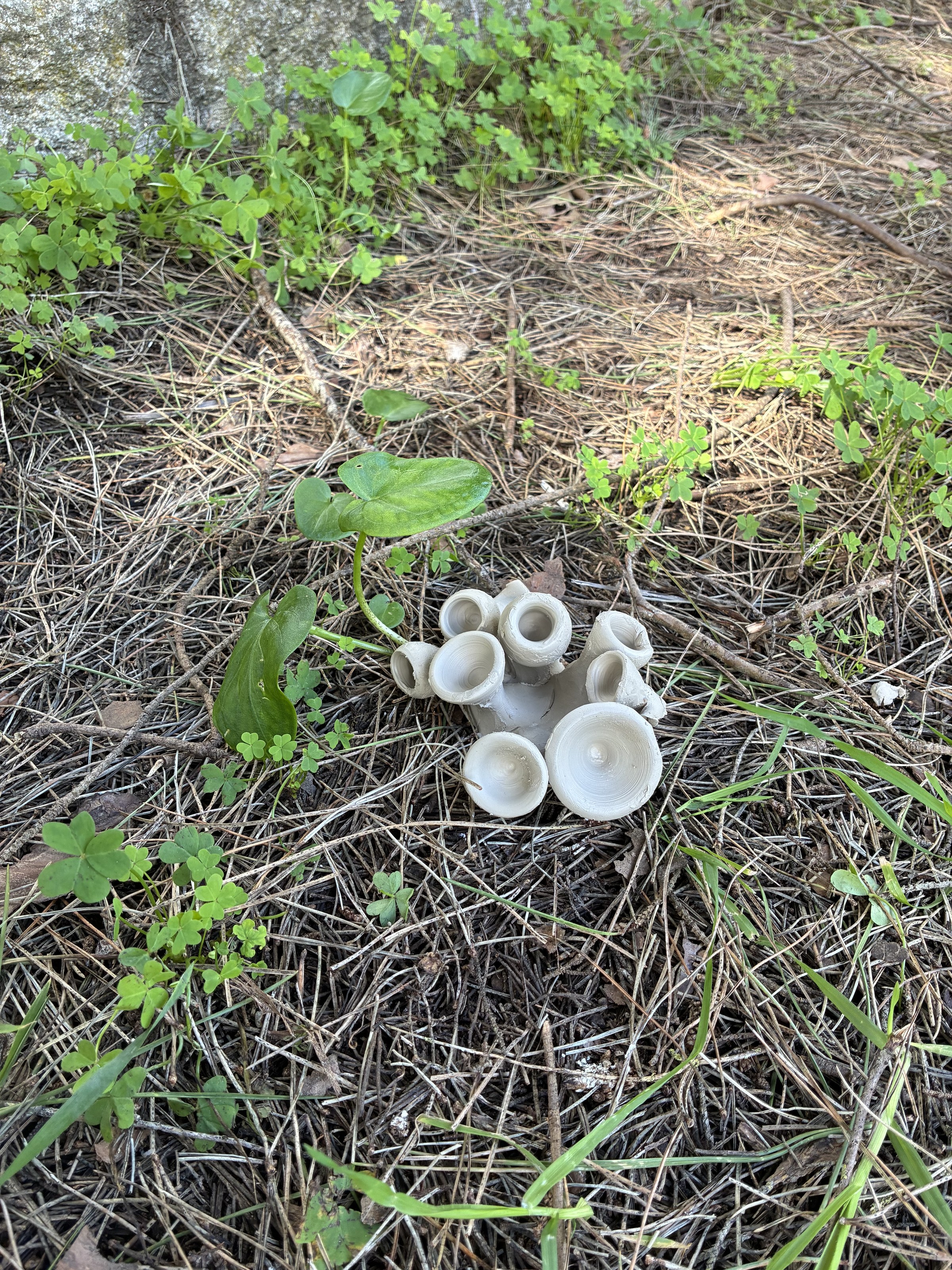
In Barro e Pele, I made small vessels from unfired white clay on a potter’s wheel and then attempted to attach them directly to my skin.
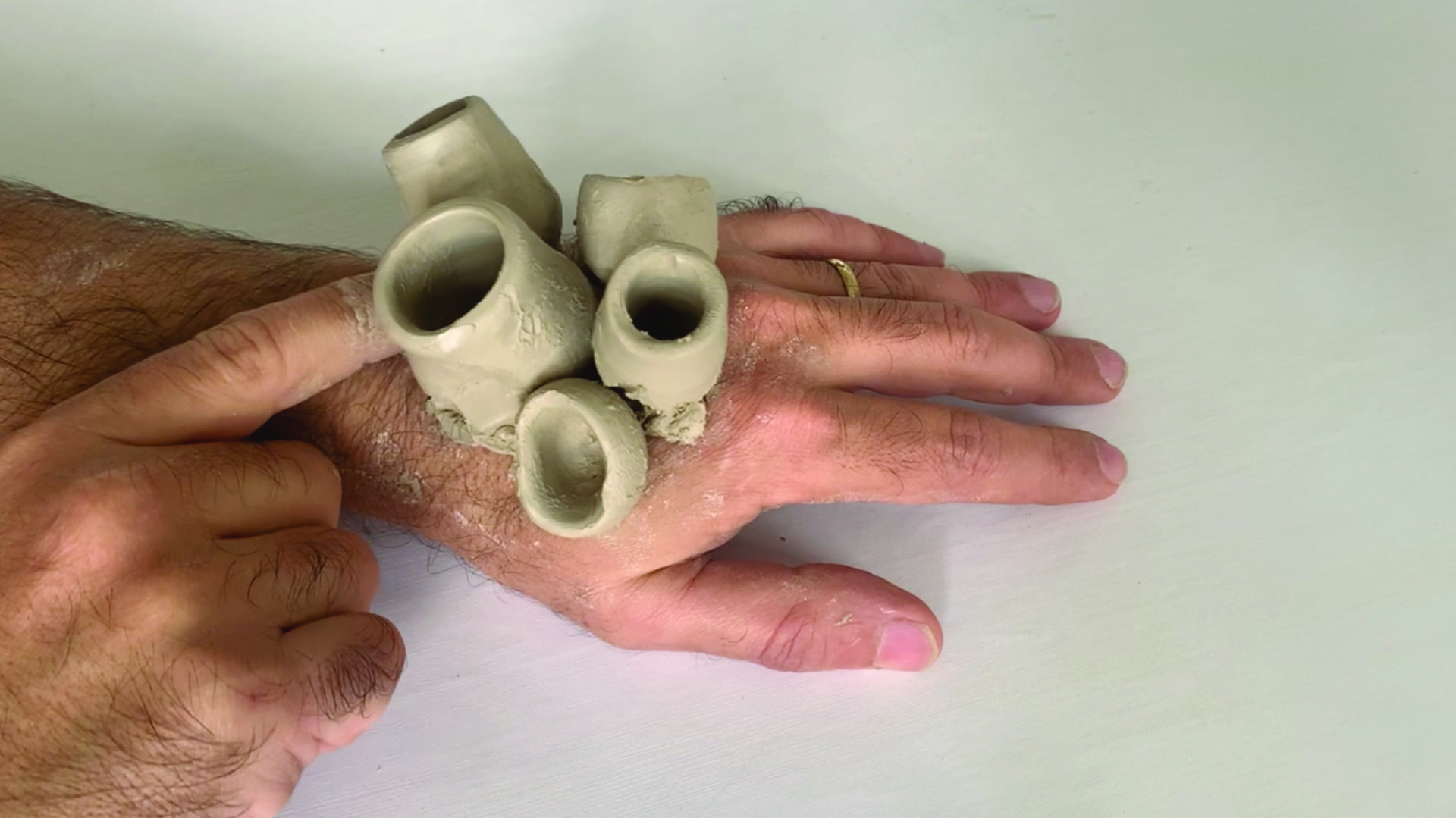
The action was recorded on video and unfolds in two parts. In the first, I work with a technique I have known for years. In the second, I attempt something for which that experience no longer provides sufficient answers.
The difference between these two situations became central to the work.
01
The Learned Gesture
At the potter’s wheel, my hands follow the rotation of the clay. I centre the material, open the vessel and raise its walls. The movements repeat, but each vessel requires small adjustments in pressure, speed and position.
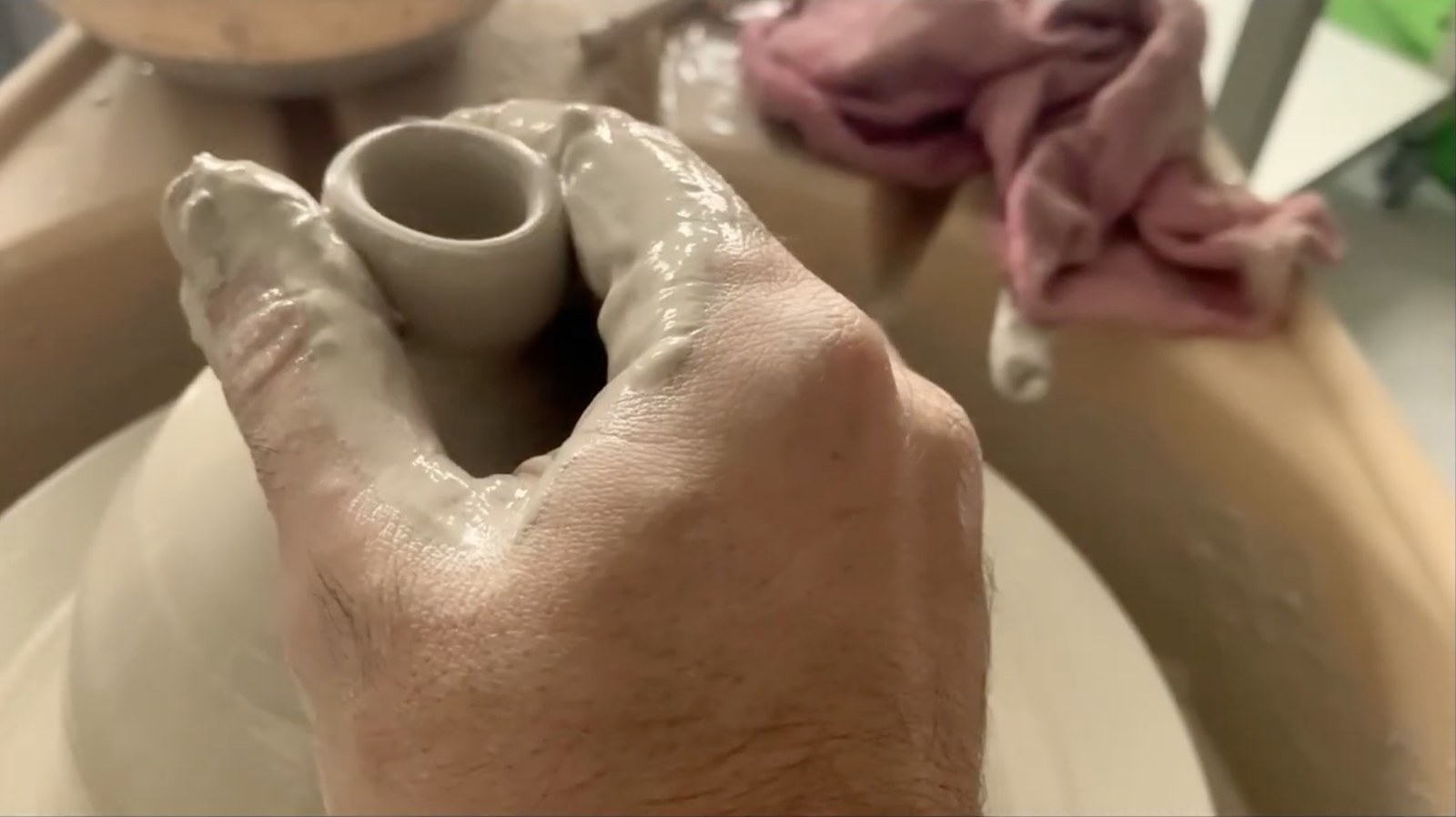
The gesture at the potter’s wheel. Still from the video performance.
I learned to work this way through practice, observation and guidance from other ceramicists. Some aspects of this knowledge I can explain to a student, while others depend on a familiarity developed over time.
Today, many of these movements happen before I need to think about them. When I try to consciously control every gesture, that continuity can be lost.
In the first part of the video, the editing follows this rhythm. The cuts preserve the continuity of movement, making the differences between the vessels almost imperceptible.
02
Skin as a Surface
After shaping the vessels, I attempted to attach them to my body.
Initially, I considered using a coarse fabric mesh to support them. I eventually abandoned this solution because it would have removed precisely the difficulty I wanted to experience: direct contact between clay and skin.
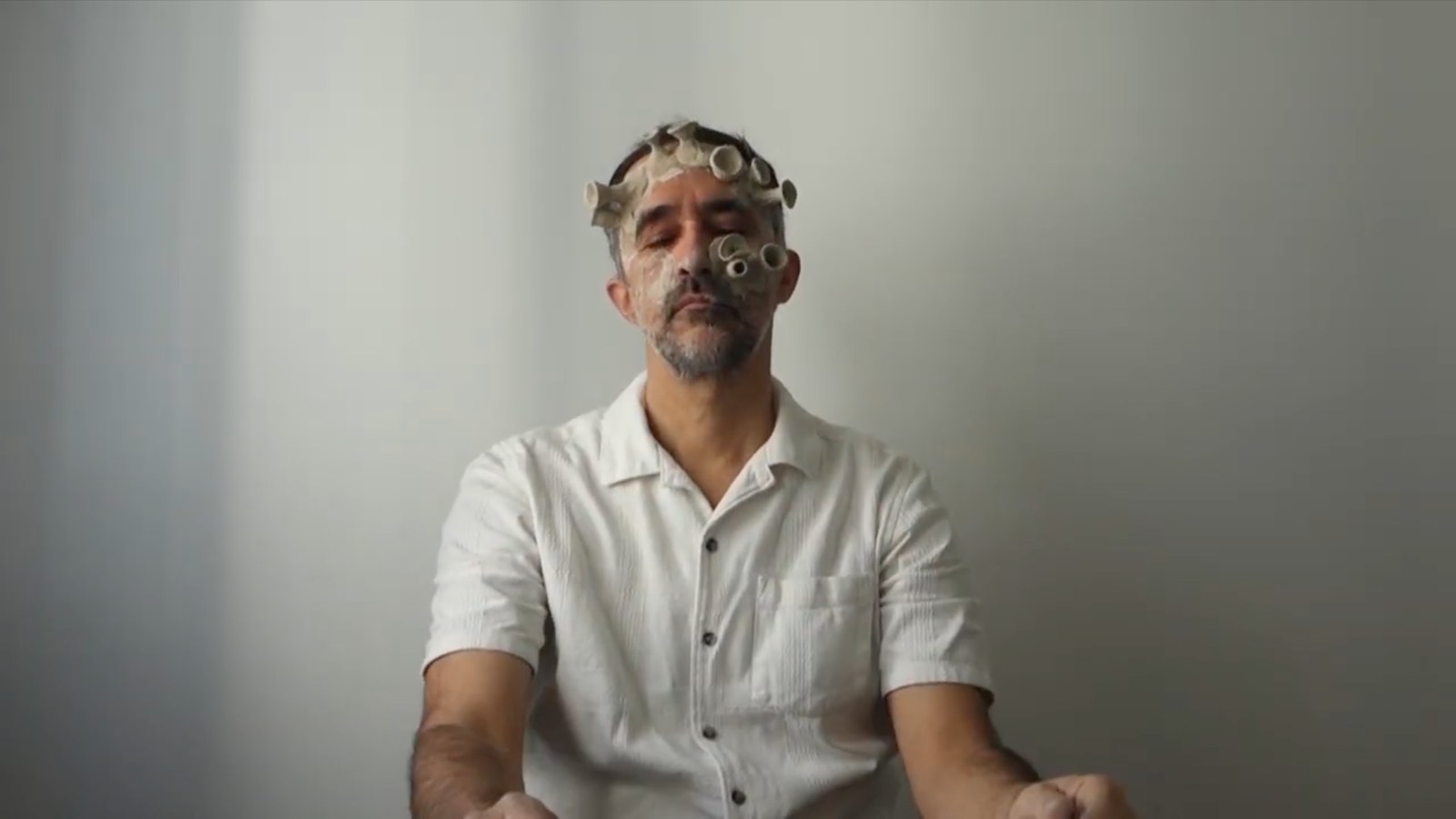
Vessels on the face. Still from the video performance.
What seemed simple proved difficult. One hand tried to position the vessels, while the other offered my body as their support. The skin moved, the vessels slipped and frequently fell.
At the wheel, I could anticipate much of how the clay would respond. Against my skin, each attempt demanded renewed attention. The fear of dropping the vessels interfered with my movements, making each gesture hesitant.
The editing follows this change. The continuity of the first part gives way to a sequence marked by interruptions. The cuts neither conceal the falls nor attempt to artificially restore the flow of the action.
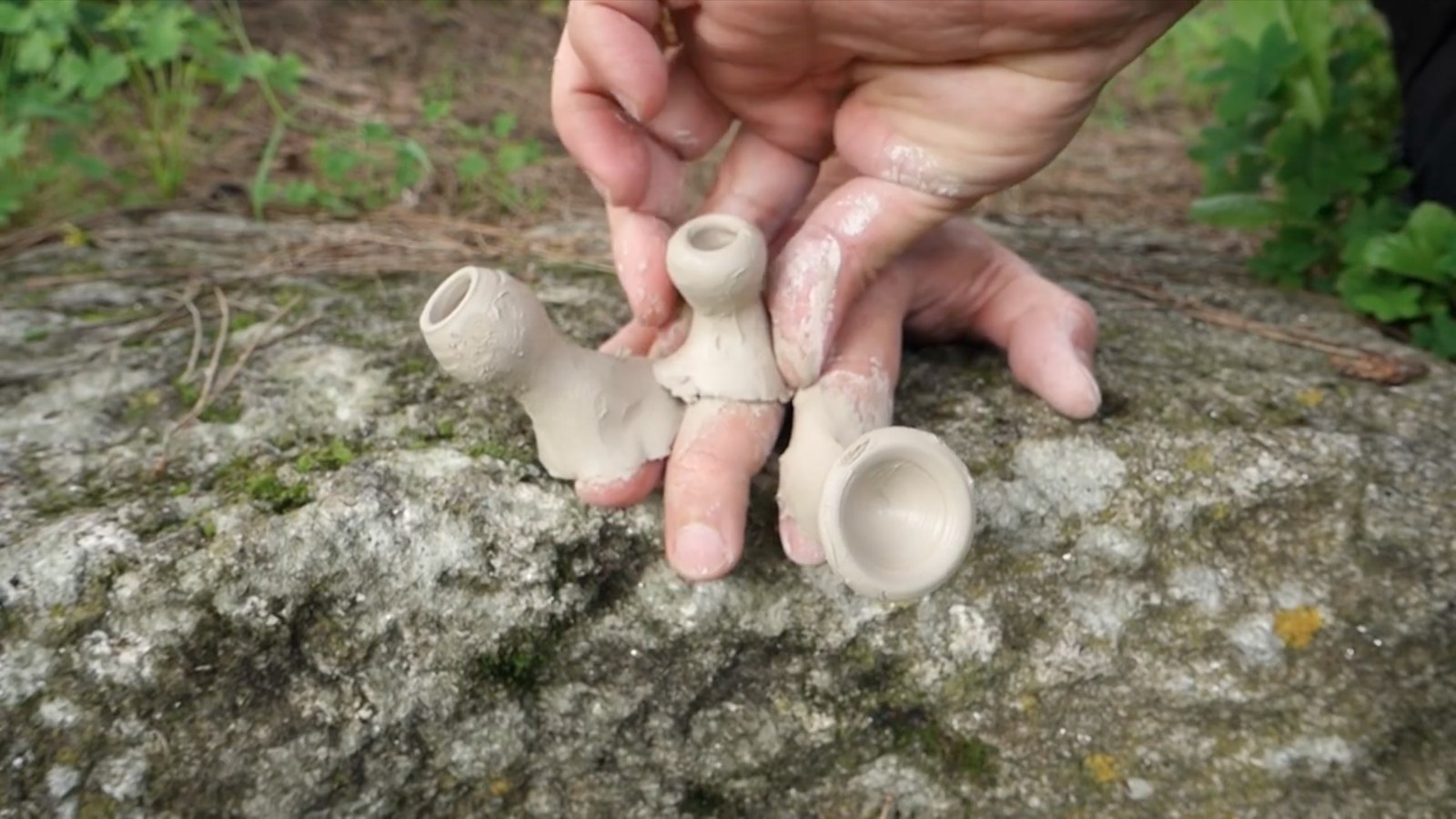
Attempting adhesion. Still from the video performance.
03
What Does Not Remain
While developing this performance, I returned to Passagem (Passage, 1979), by Celeida Tostes. In that work, the artist enters a large clay vessel. In Barro e Pele, I explore a movement in the opposite direction: attempting to make small vessels adhere to my body.
This connection also led me to reflect on the limits of my relationship with the symbolism of earth in Afro-Brazilian traditions. Among these references, Obaluaê acquired a personal significance for me, particularly through the associations between wounds, vulnerability and transformation.
I did not intend to represent this orixá or claim a ritual belonging. The reference helped me recognise a question already present in the gesture: whether an experience can continue without eliminating what resists within it.
The vessels did not remain attached. The action never achieved the stability I had initially sought.
Over time, I realised that falling did not interrupt the work. It was precisely what made it possible as an artistic experience.
04
The Video
The video preserves the difference between the two parts of the performance.
In the first, the movements at the potter’s wheel follow one another almost continuously. Between the two actions, images of a window and trees moving in the wind briefly mark a transition between spaces.
In the second, the vessels no longer follow a predictable movement. Their adhesion is short-lived, and their falls begin to determine the rhythm of the editing.
Ambient sound remains throughout the work. Hard cuts preserve the interruptions in the gesture without attempting to disguise them.
Barro e Pele emerged from an attempt to bring two material bodies together without being able to keep them joined. What remained was a record of that impossibility and of the different ways my body responded to it.
Work Details
Barro e Pele (Clay and Skin)
Gustavo Assis
Video performance
30 March 2026
Duration: 3 min 08 sec