
Art · installation · 2023
Nanã
Between Permanence and Transformation
In 2023, I presented the installation Nanã in the group exhibition Meio ao meio: Há meio, at the UNIFASE Cultural Centre in Petrópolis, Rio de Janeiro, Brazil.
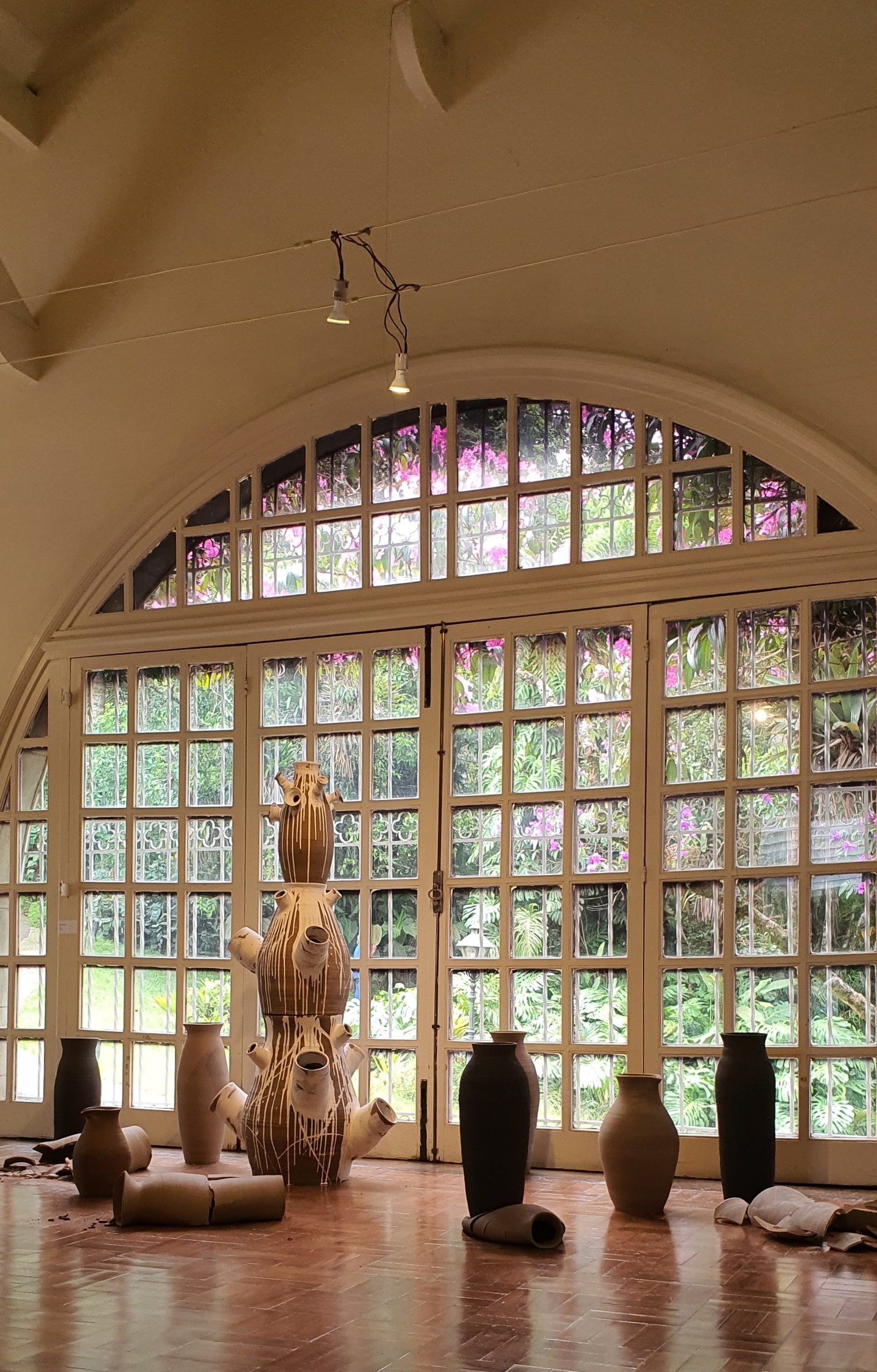
Nanã, 2023. Installation at the UNIFASE Cultural Centre.
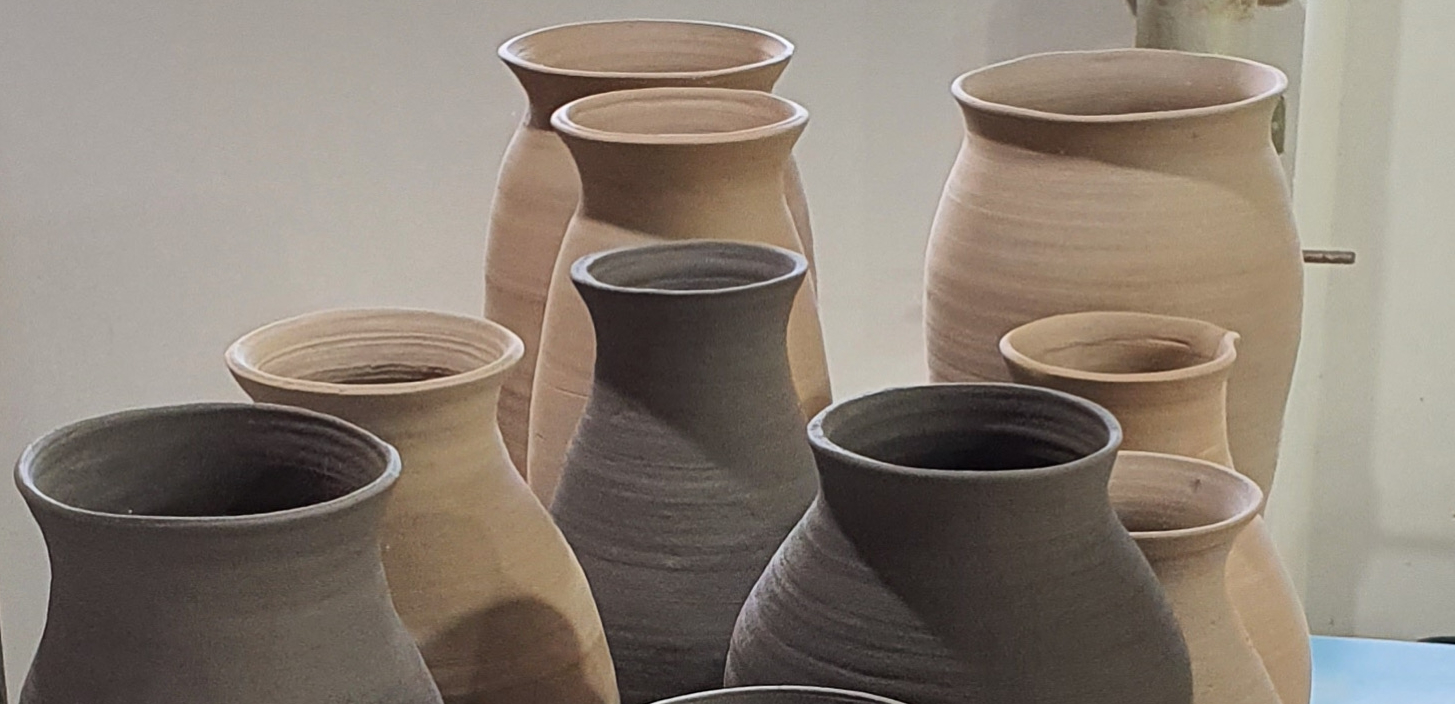
The work brought together thirteen unfired clay vessels and a fired ceramic sculpture. The difference between these two states of the material was central to the installation. While clay transformed by firing acquires a relatively stable structure, unfired clay remains vulnerable to water, wear and the passage of time.
The installation was named after Nanã, an orixá associated with mud and ancestry in Afro-Brazilian religious traditions. The vessel, in turn, carries a long history as a container used to hold and preserve. In the unfired vessels, that function remained only a possibility: they had the form of containers, but not the resistance to water required to fulfil that purpose.
01
The Gesture of Breaking
During the exhibition opening, I broke some of the unfired clay vessels. The fragments remained scattered throughout the installation.
The gesture went against a habit I had cultivated over many years as a ceramicist: protecting the pieces I made and preventing damage or loss.
In this context, however, breaking was part of the work. The vessels already carried the possibility of their own dissolution. Breaking them made that condition visible.
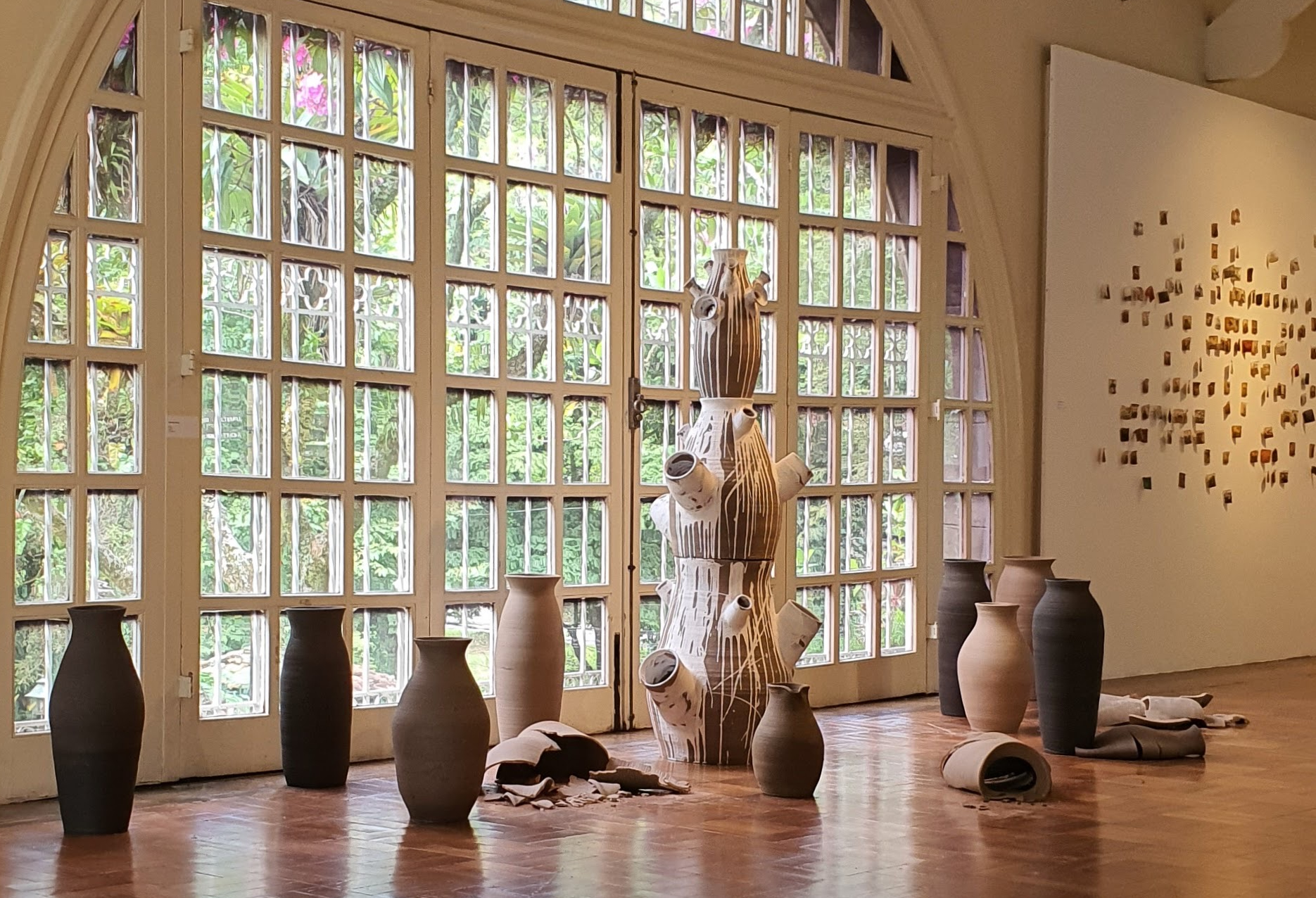
View of the installation, with vessels and fragments on the floor.
02
Encounters with the Public
As the weeks passed, I noticed that the fragments prompted reactions I had not anticipated.
On some occasions, the installation was perceived as having been accidentally damaged. Some visitors were surprised to find the broken vessels, initially assuming that something had happened to the work. In another situation, the shards scattered across the floor were seen as an obstacle to the use of the space.
These experiences led me to observe how the same situation could acquire different meanings. What I understood as a deliberate action could be perceived as an accident, disorder or an obstruction.
During the exhibition, I was also asked what interpretation I wanted the public to give Nanã. I preferred not to establish a single meaning. I explained the materials and the symbolic context of the work, leaving room for other readings to emerge from each person's experience.
03
The Return of the Material
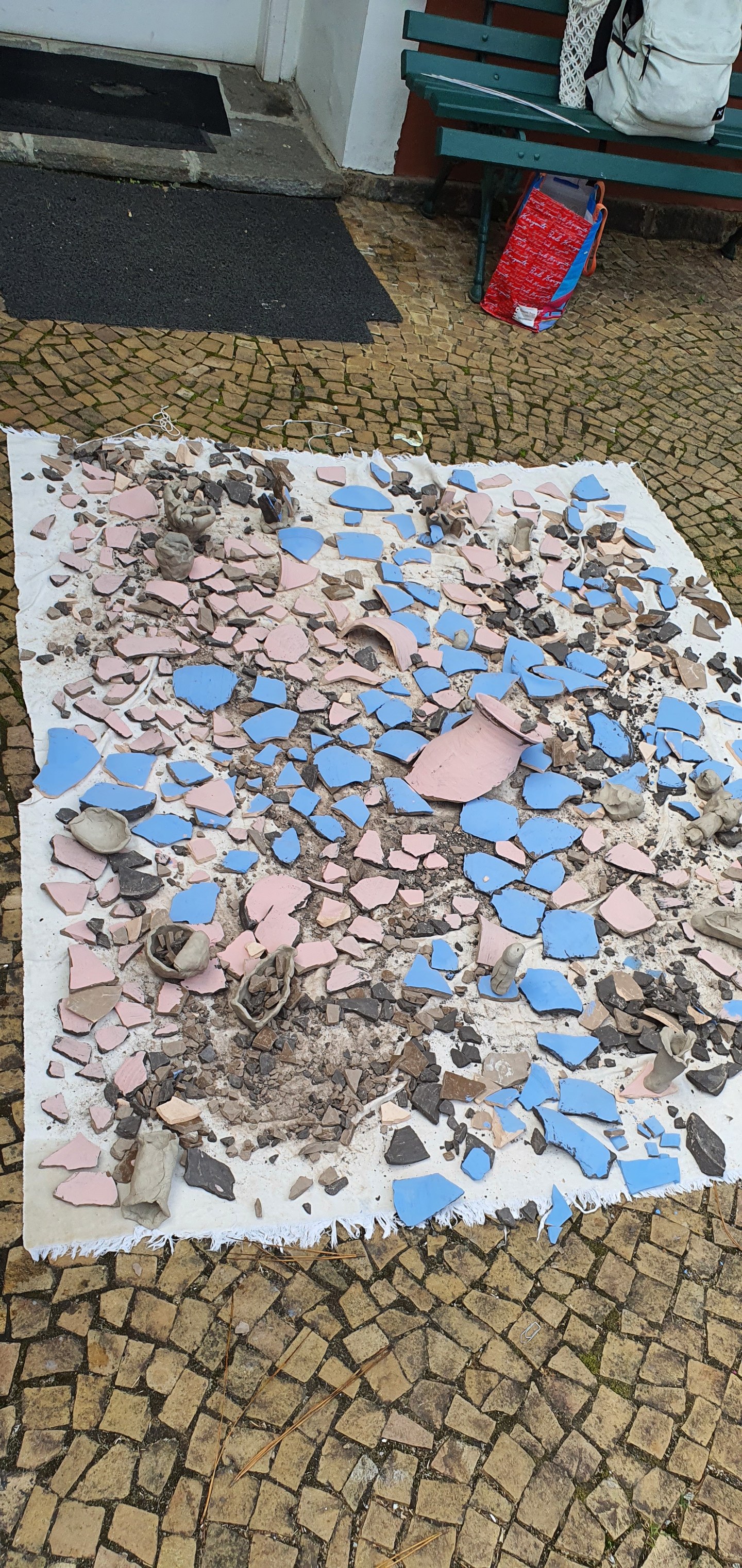
Clay fragments arranged into a mosaic during the collective activities.
At the closing of the exhibition, the remaining vessels became part of a collective action. Each participant was invited to express something about the place they wished to inhabit and to break a vessel.
Afterwards, some of the unfired clay fragments were mixed with water and glue to make a paint used in a collective painting. Other shards were arranged into a mosaic, with participants placing small sculptures of their own making in the spaces between them.
The work thus took on a form I had not anticipated when I first began shaping the vessels.
While dismantling the installation, I broke some of the pieces that were still intact. The unfired clay, extremely fragile after drying, would hardly have survived the journey home. Unlike fired ceramics, it could be rehydrated and worked again.
That possibility of return was also part of what I had learned from the work.
The experience of Nanã changed my understanding of breaking. The broken vessels prompted conversations, resistance and new actions. The installation also came to exist through these responses, beyond the form I had originally conceived.
Work Details
Nanã, 2023
Installation comprising 13 unfired clay vessels, with average dimensions of 50 × 30 × 30 cm, and one fired ceramic sculpture measuring 160 × 64 × 64 cm.
Exhibition: Meio ao meio: Há meio
Venue: UNIFASE Cultural Centre, Petrópolis, Rio de Janeiro, Brazil
Dates: 3 February – 18 March 2023
Curatorial guidance: Sonia Salcedo del Castillo