
Cobalt Pigmentation
Hello! ;)
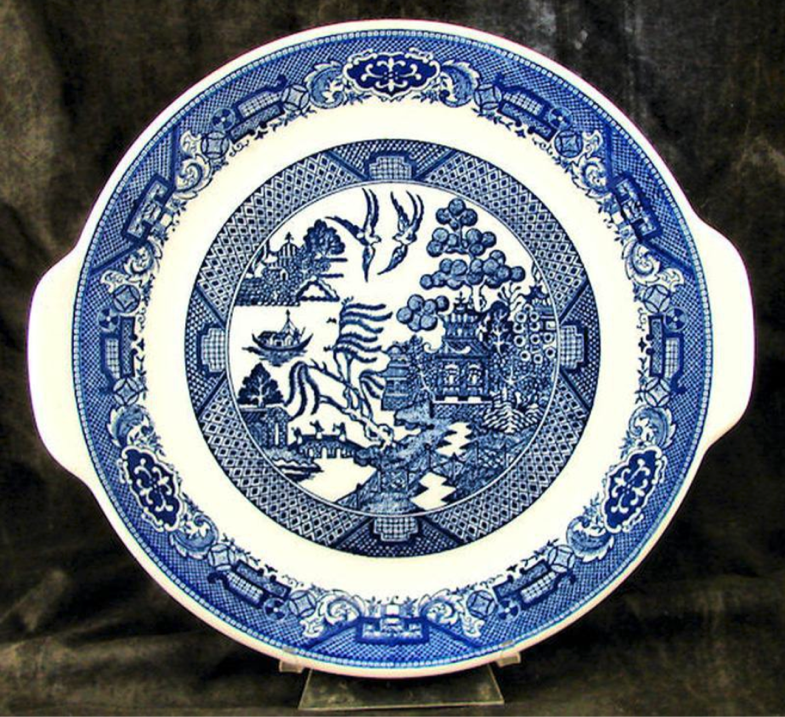
You have probably seen Portuguese tiles with blue decoration on the white ground of faience—or perhaps you remember a typical Chinese vase with blue brushwork?
That blue decoration comes from a cobalt-based pigment.
History
Cobalt compounds have been used for centuries to give glass, glazes and ceramics a vivid blue. Cobalt has been detected in Egyptian sculptures and Persian jewellery from the 3rd millennium BCE, in the ruins of Pompeii (destroyed in 79 CE), and in China from the T’ang dynasty (618–907 CE).
In Japan, this traditional cobalt-based pigment is called gosu. In 1510, a Japanese potter, Gorodayu Shonzui, went to China to study porcelain manufacture. He returned after 5 years, bringing porcelain clays and gosu.
In Europe, East Asian influence inspired a search for the purity of porcelain and its blue cobalt designs. Delftware in the Netherlands was among the forerunners of this style. Later, English and French makers produced elaborate designs and adapted hand painting to industrial production through transfer printing.
Composition
In the past, modern purification processes were unavailable. Rather than a pure substance, potters used ore directly from the deposit, grinding it to prepare the pigment. Besides cobalt, this material often contained manganese, iron and other constituents, yet the results were very satisfactory. Some critics even consider them superior to those obtained with industrially purified cobalt. The raw ore is dark blue-green. It is ground into powder, calcined and moistened with water in a mortar. Designs are painted on unfired or bisque-fired ware, then covered with glaze, often transparent. This is why it is called underglaze decoration. After firing, it appears indigo, or blue when used on iron-containing glazes.
Demand and scarce deposits made these ores very valuable, and their use was strictly controlled. In China, paper was placed beneath the piece being painted to prevent any waste. Today, cobalt remains a relatively expensive ore, with its most important deposits in Africa. Most potters buy synthetic gosu ; preparing it is rather demanding, requiring calcination and very fine grinding. Varying amounts of cobalt oxide, iron oxide, manganese dioxide, nickel and kaolin can be combined with cobalt to produce pigments of different quality and strength.
Because cobalt settles quickly in water, a thick tea extract—cha-jiru in Japanese—is used in East Asia instead of water to help emulsify the pigment.
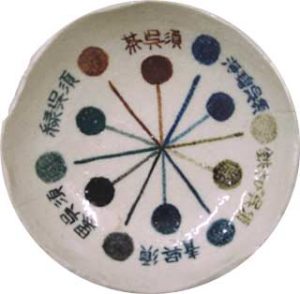
Above: Different shades of the pigment known as gosu, sold in Japan. Clockwise: Cha-gosu (brown gosu), Kaiheki-gosu (cobalt blue), Tetsusabi-gosu (rust gosu), Ao-gosu (blue gosu), Kuro-gosu (black gosu) and Midori-gosu (green gosu). Source: http://www.tougei.com/shop/g/g715017/
Sources:
About the Author: Gustavo Assis

Related Posts



E o azul escuro que tem nas canecas da chopp da ceramarte também é com este material?
Olá! Provavelmente sim. Um abraço!
Copos pigmentados com cobalto fazem mal à saúde?
Se não forem devidamente isolados por esmalte podem ser prejudiciais à saúde.