The Crystalline Structures of Silica and Their Importance in Studio Ceramics
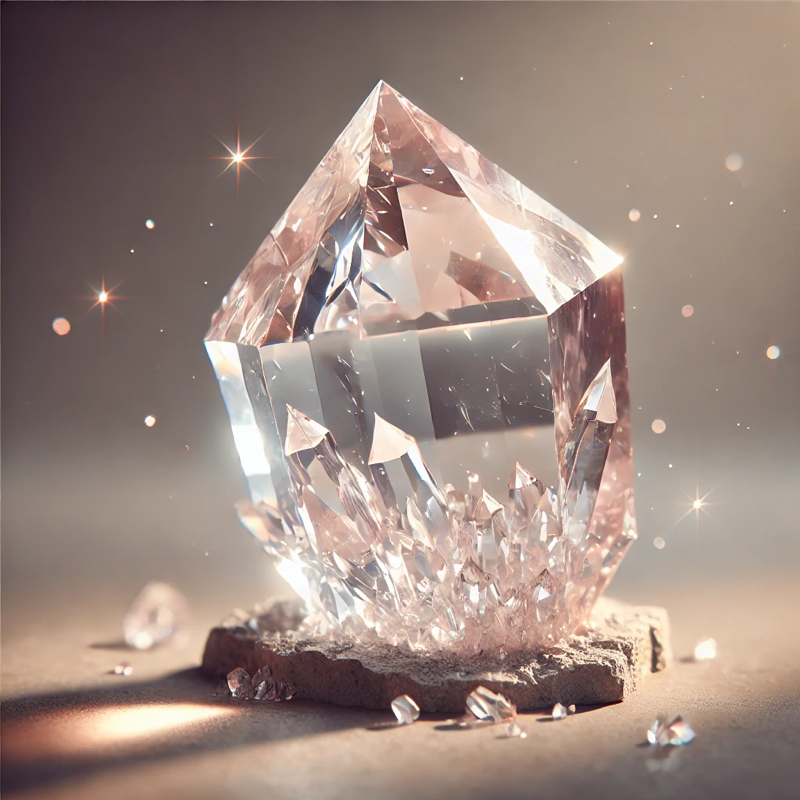
The silica (SiO2) is one of the most common components of ceramic bodies and plays a fundamental role in how pieces behave during firing. It can exist in several crystalline configurations, including alpha-quartz, beta-quartz, cristobalite and tridymite. Each phase has distinctive properties that directly influence the performance, stability and appearance of ceramic pieces.
Silicon atoms form molecules with oxygen, producing silica (SiO2). To achieve a more compact arrangement, silica chains share oxygen and silicon atoms, requiring an additional oxygen atom to satisfy silicon's valence.
This results in a tetrahedral structure, with silicon at the centre. However, the silicon atom is slightly larger than the space left by the four surrounding oxygen atoms. It therefore pushes the oxygen atoms slightly outwards, creating room within the crystal network for small structural adjustments, such as those occurring during transitions between the alpha and beta forms.
1. Alpha-Quartz
•Crystal Structure:
•Trigonal.
•Stable at temperatures below 573 °C.
•Characteristics:
•Low thermal expansion.
•Highly mechanically stable, but sensitive to phase changes.
•Importance in Ceramics:
•The most common initial form of silica in ceramic bodies.
•The transformation from alpha-quartz to beta-quartz during heating is critical:
•It occurs at 573°C.
•It involves a slight volumetric expansion (~0.8%).
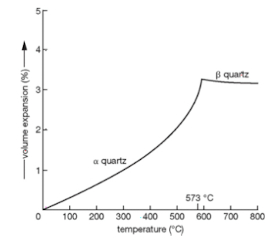
Graph of alpha- and beta-quartz expansion. Source: Hamer, Frank and Jack.
•Inappropriate heating and cooling rates can cause cracks.
2. Beta-Quartz
•Crystal Structure:
•Hexagonal.
•Stable between 573 °C and 870 °C.
•Characteristics:
•Greater thermal expansion than alpha-quartz.
•Reverts to alpha-quartz during cooling.
•Importance in Ceramics:
•The transformation from beta-quartz to alpha-quartz during cooling is a major cause of thermal stress in ceramic pieces.
•Requires careful control of the cooling rate to avoid failure.
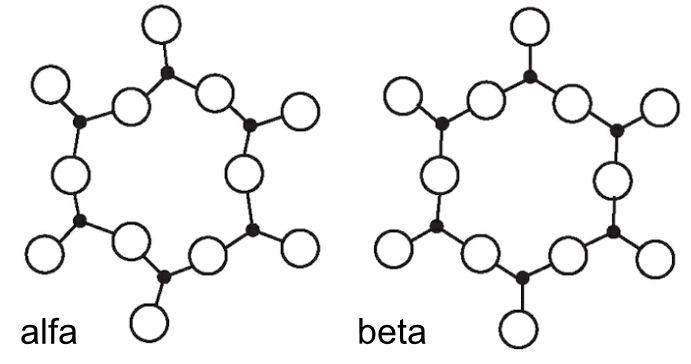
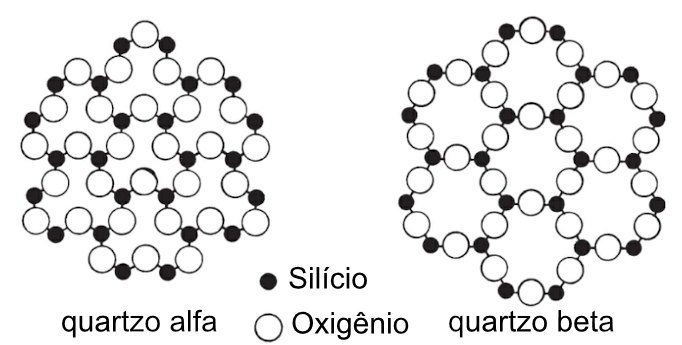
Diagram of alpha- and beta-quartz. Source: Hamer, Frank and Jack.
3. Tridymite
•Crystal Structure:
•Hexagonal or orthorhombic.
•Stable between 870 °C and 1470 °C (depending on pressure and kiln conditions).
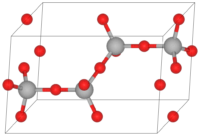
Crystal structure of α-tridymite. Source: Wikipedia.
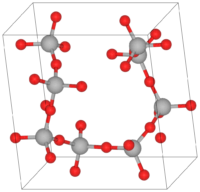
Crystal structure of β-tridymite. Source: Wikipedia.
•Characteristics:
•A more open, less dense structure than quartz.
•Greater thermal anisotropy, which can cause internal stresses.
•Importance in Ceramics:
•Generally forms as an intermediate phase during high-temperature firing.
•Can improve heat resistance in refractory products, but its anisotropy must be managed.
4. Cristobalite
•Crystal Structure:
•Cubic at high temperatures (beta) and tetragonal at low temperatures (alpha).
•Stable above 1,470°C, but can be formed artificially at lower temperatures through the interaction of silica with alkali fluxes.
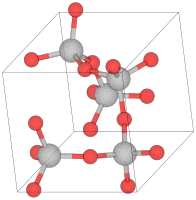
Alpha-cristobalite configuration. Source: Wikipedia.
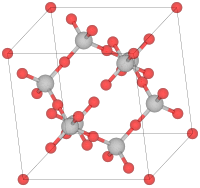
Beta-cristobalite configuration. Source: Wikipedia.
•Characteristics:
•Greater thermal expansion than other forms of silica.
•The phase transformation from alpha-cristobalite to beta-cristobalite during cooling can cause severe thermal stresses.
•Importance in Ceramics:
•Cristobalite can increase resistance to high temperatures, but care is needed to avoid problems with thermal stress.
•Commonly used in refractories and ceramic glazes to adjust thermal expansion coefficients.
Why Are Crystalline Configurations Important?
1.Phase Transformations and Thermal Stress:
•Silica phase changes during heating and cooling involve volume changes that can cause cracks or deformation in pieces.
•This requires strict control of heating and cooling rates.
2.Mechanical and Thermal Properties:
•The choice of silica phases directly influences the mechanical strength and thermal stability of pieces.
•For example:
•Alpha-quartz: High stability.
•Cristobalite: Significant thermal expansion, but good heat resistance.
3.Aesthetics and Functionality:
•In ceramic glazes, different forms of silica affect texture, gloss and thermal shock resistance.
4.Composition Control:
•Adjusting the amount of free silica and combining different crystalline forms allows ceramic performance to be optimised, avoiding cracks and deformation.
Tips for Managing Silica's Crystalline Configurations
1.Heating and Cooling Rate:
•Avoid sudden temperature changes, especially around 573 °C (quartz inversion) and 200–270 °C (cristobalite transformation).
2.Body Composition:
•Reduce the amount of free silica in ceramic bodies to minimise the effects of phase transformations.
•Use fluxes such as feldspar to incorporate some of the silica into the glassy phase.
3.Homogeneity:
•Ensure that silica is evenly distributed throughout the body to avoid areas of concentrated stress.
4.The Alumina–Silica Relationship in Cristobalite and Tridymite Formation:
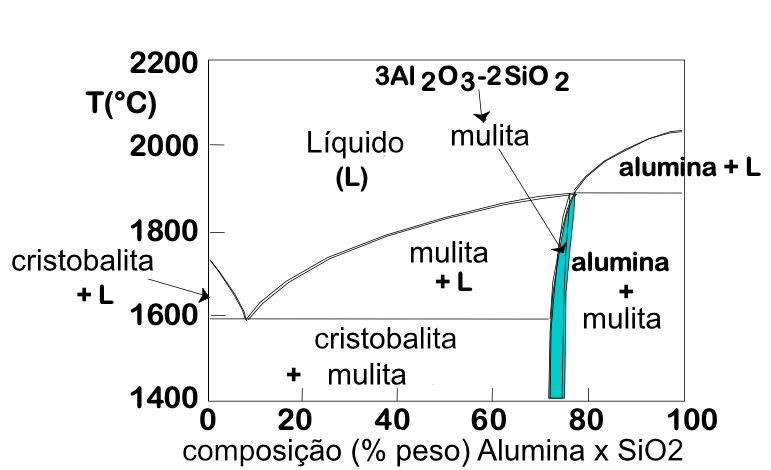
The proportion of alumina (Al₂O₃) relative to silicon (SiO₂) can influence the formation of tridymite and cristobalite in ceramics or other silica-containing materials. Alumina can affect silica's crystallisation behaviour during heating, cooling and sintering.
•Alumina can act as a modifier of the silica–alumina system, changing the nucleation and growth pathways of silica polymorphs.
•High proportions of alumina relative to silicon can favour the formation of alumina-containing phases, such as mullite (3Al₂O₃·2SiO₂), at the expense of tridymite and cristobalite.
•Low alumina concentrations leave more silica available to crystallise as tridymite or cristobalite, but the chemical environment, temperature and treatment duration are crucial.
•As the alumina proportion increases in silica–alumina systems, mullite formation is favoured and less tridymite and cristobalite form.
•In low-alumina systems, silica crystallises predominantly as tridymite and cristobalite.
Conclusion
Silica's crystalline configurations are far more than scientific curiosities: they play a central role in successful handmade ceramics. Understanding the behaviour of alpha-quartz, beta-quartz, tridymite and cristobalite allows more precise control of the ceramic process, creating pieces that are not only beautiful but also durable and functional.
Try adjusting your ceramic bodies and firing methods to take silica's properties into account, and share your experiences in the comments!
References:
- Hamer, Frank and Janet. The Potter´s Dicionary,
- Hansen, Tony. Silica. Digital Fire. https://digitalfire.com/material/silica.
- Gliozzo, Elisabetta. Ceramic technology. How to reconstruct the firing process. Archaeological and Anthropological Sciences (2020) 12:260. https://doi.org/10.1007/s12520-020-01133-y
About the Author: Gustavo Assis

Related Posts