
Shall we talk about raku? :-)
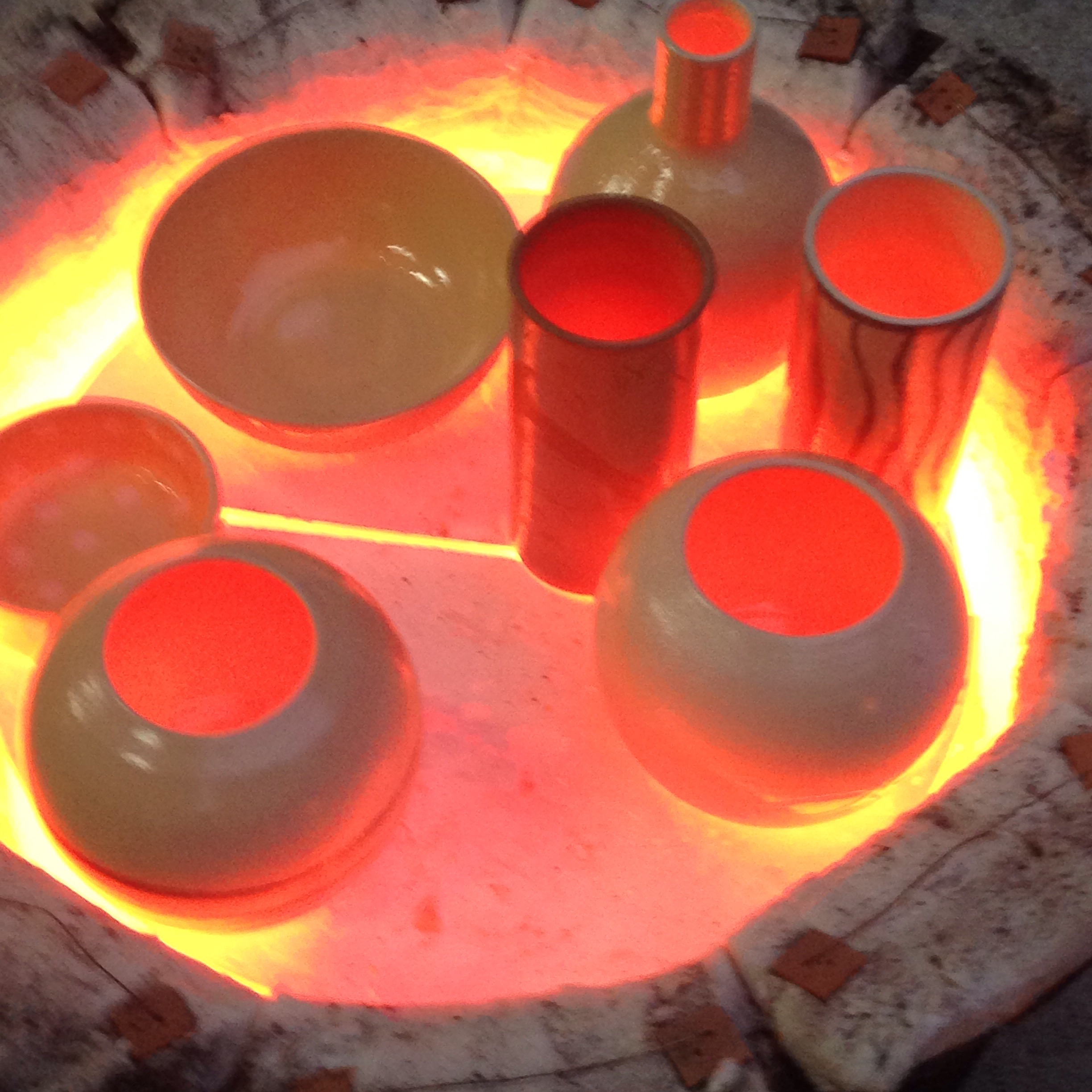
Hello! I'm starting this blog to share knowledge about ceramics. Look around: they surround us in the bathroom, the kitchen and under our feet. We hardly notice them, but they are there.
Here, though, I would like to focus on the artistic side of the material: the origins of techniques and the fascination of the alchemy that takes place at very high temperatures.
First, a little about myself. I am an architect and lived for 3 years in Kyoto, Japan. There I attended tea ceremony classes, studied Japanese landscape design and practised Zen Buddhism. When I returned to Brazil, I discovered ceramics and realised how it complemented the other interests I had developed earlier in life. Since then, I have devoted myself to learning more, not only by translating Japanese texts but also by literally getting my hands into the clay.
I would like to begin this blog with a technique known in both East and West. It is called Raku.
Raku ware (楽焼 raku-yaki – its r is pronounced like the r in the Portuguese word para) is a type of Japanese pottery traditionally used in the tea ceremony, particularly for tea bowls (chawan). It is traditionally hand-modelled rather than wheel-thrown, relatively porous and low-fired, covered in lead-based glazes and removed from the kiln while still glowing. In the traditional Japanese process, the piece is then left to cool at room temperature. Placing it in a container filled with combustible material is not traditional Japanese raku: contemporary potters around the world have modified the original techniques.
Origins
Raku means “comfort”, “ease” or “enjoyment” and comes from Jurakudai, the name of a palace in Kyoto built by Toyotomi Hideyoshi (1537–1598), the leading warrior and statesman of his time.
In the 16th century, the Japanese tea master Sen no Rikyū was involved in building Jurakudai and worked with a tile-maker named Chōjirō. Their partnership also produced hand-modelled tea bowls for Rikyū's wabi-style tea ceremonies. These pieces were initially called “ima-yaki”, or contemporary ware, and were distinguished from Juraku-yaki, named after the red Juraku clay they used. Hideyoshi presented Jokei, Chōjirō's son, with a seal bearing the Chinese character raku. Raku then became the name of the family making this pottery. Both the name and the ceramic style have been passed down through family members, some adopted, to the present 15th generation, Kichizaemon. The name and style have influenced both Japanese culture and literature.
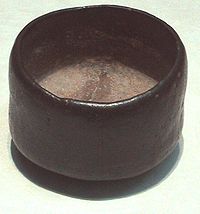
Black Raku
Raku in the West
Raku became popular among American potters in the late 1950s with the help of Paul Soldner. They retained the general firing process of rapid heating and cooling while developing their own distinctive style.
Unpredictable results and intense colours attract modern potters. The patterns and colours arise from rapid cooling and the amount of oxygen allowed to reach the ware. Depending on the desired effect, a piece may be quenched in water, cooled gradually at room temperature or placed in a drum filled with combustible material such as newspaper and covered to produce smoke. Water immediately cools the ware, stopping the glaze's chemical reactions and fixing its colours. Smoke from the combustible material blackens unglazed areas. The oxygen available during firing and cooling affects both glaze colour and the amount of cracking.
-
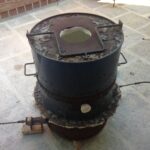
- Raku kiln
-
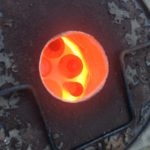
- Piece during firing
Unlike the modest, hand-modelled tea bowls of traditional Japanese raku, Western raku tends towards vibrant colours and varied sizes and forms, from elegant vessels to eccentric abstract sculptures. Although some pieces are hand-modelled, most Western potters use wheels to make their raku ware. Western practice has even developed a branch known as horsehair raku. These pieces are usually white, with tangled black lines and smoky patches, created by placing horsehair, feathers or even sugar on the extremely hot ware as it comes out of the kiln.
-
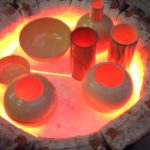
- Glowing pieces
-
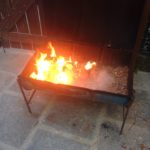
- Reduction chamber
These photographs were taken at a raku event I attended. Below is a piece I made, before and after firing. In the next post, I will explain the Western raku process in more detail. See you then!
-
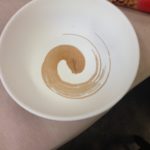
- Before firing
-
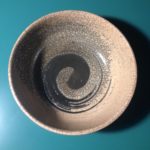
- After firing
About the Author: Gustavo Assis

Related Posts


Hello Gustavo,
I really enjoyed your text. Could you recommend a book to learn more about raku?
Hello! Thank you for reading and getting in touch! There is a Brazilian book with a chapter devoted to Raku: Cerâmica – Arte da Terra, edited by Miriam Gabbai and published by Callis. It is out of print, but you may be able to buy it through sites such as Estante Virtual.
Hi Gustavo. I'm loving your texts. I fell in love with ceramics a few years ago and have been researching ash glazes in my electric kiln. I teach Portuguese in the state school system and can't wait to retire so that I can devote myself entirely to ceramics. It's wonderful to find someone like you who shares acquired knowledge so clearly. Thank you!
Thank you for reading and for your support, Efigênia! I wish you every success with ceramics and your research!
Hello Gustavo. I discovered your website and blog today while browsing the internet. I'm entering the world of ceramics with a few classes and many plans for the future. Raku fascinates me, and I think the ease and independence of the gas kiln appeal to me. In fact, it was your latest blog post that brought me here. I hope to learn a great deal from your articles.
I've visited Japan twice, and Kyoto left a lasting impression for its preserved traditions! I envy, in the best sense, the experience you must have gained living there. Congratulations on sharing your knowledge. Best wishes.
Hello Celso, thank you for your encouraging words. Kyoto really is unforgettable. Enjoy your studies, and thank you for reading!
Good morning, Gustavo!
I'd like to buy a kiln as a gift for my daughter, who makes wonderful pieces. Where can I buy one, and which would you recommend?
I loved learning about raku through your texts.
Best wishes.
Hello Leci. As I build my own kilns, I'm not in a position to recommend a brand. Thank you for reading!