Different Types of Clay and Their Uses in Studio Ceramics
Hello everyone!
Clay is at the heart of handmade ceramics, and choosing the right type for your project can make the difference between a successful piece and a technical challenge.
Each clay has specific properties related to its morphology and chemical composition, which affect its plasticity, shrinkage, and even its behaviour during firing.
Clays are aluminosilicates with very small particle sizes, around 2 micrometres, and each type differs in the way its atoms are arranged. Silicon and oxygen form a tetrahedral structure, while aluminium and hydroxyl compounds (OH-) form octahedral compounds.
We therefore classify clay crystal structures using T to designate the silicon sheets and O for the aluminium sheets.
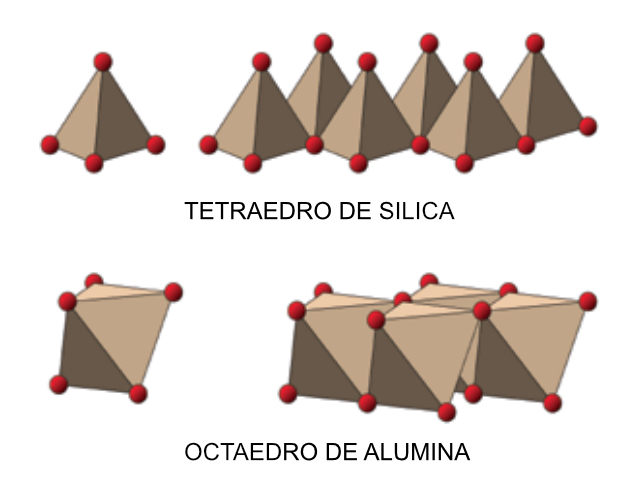
Diagram of SiO2 and Al2O3 atomic structures – Source: Linda Bloomfield.
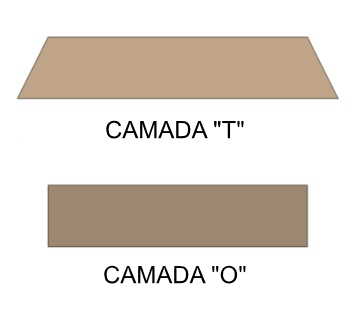
Diagrams of O and T layers – Source: Linda Bloomfield.
Let us explore how common clays, such as kaolinite, biotite and illite, influence the ceramic process.
1. Kaolinite: The Basis of White Ceramics
•Composition and Morphology:
•Kaolinite has a crystal structure of TO layers (tetrahedral–octahedral), which is stable but less plastic.
•Chemically, it consists of aluminium and silica (Al2Si2O5(OH)4).
•Properties:
•Plasticity: Low.
•Shrinkage: Low, reducing the risk of cracking during drying and firing.
•Colour: Fires white or slightly yellowish, ideal for porcelain.
•Uses in Handmade Ceramics:
•A base for porcelain and white ceramic bodies.
•Excellent for pieces where dimensional stability is crucial, such as delicate sculptures or fine functional ware.
2. Illite: A Versatile Middle Ground
•Composition and Morphology:
•A structure of TOT layers with fixed potassium, providing stability and lower plasticity than montmorillonite.
•Rich in aluminium and silica, with traces of iron.
•Properties:
•Plasticity: Moderate.
•Shrinkage: Low, similar to kaolinite.
•Colour: Fires beige or light brown, depending on impurities.
•Uses in Handmade Ceramics:
•Suitable for low-temperature functional ceramic bodies.
•Can be mixed with other clays to balance plasticity and strength.
3. Montmorillonite: The Queen of Plasticity
•Composition and Morphology:
•An expansive TOT structure, with exchangeable cations (Na⁺, Ca²⁺) and interlayer water, making it highly plastic.
•Rich in aluminium and silica, but also containing magnesium.
•Properties:
•Plasticity: Very high, ideal for handbuilding.
•Shrinkage: High, potentially causing cracks during drying and firing if not controlled.
•Colour: Fires in shades from light colours to brown.
•Uses in Handmade Ceramics:
•Added in small quantities to other bodies as bentonite to improve plasticity.
•Avoid using it on its own because of its high shrinkage.
4. Biotite: An Aesthetic Presence
•Composition and Morphology:
•Rich in iron and magnesium, with a TOT crystal structure and properties similar to micas.
•Non-expanding, with perfect basal cleavage.
•Properties:
•Plasticity: Very low.
•Shrinkage: Not significant.
•Colour: Gives dark or metallic tones when present in significant quantities.
•Uses in Handmade Ceramics:
•As a decorative additive in bodies or glazes.
•Contributes textures and visual effects to rustic pieces.
5. Red Clays: Rustic and Versatile
•Composition and Morphology:
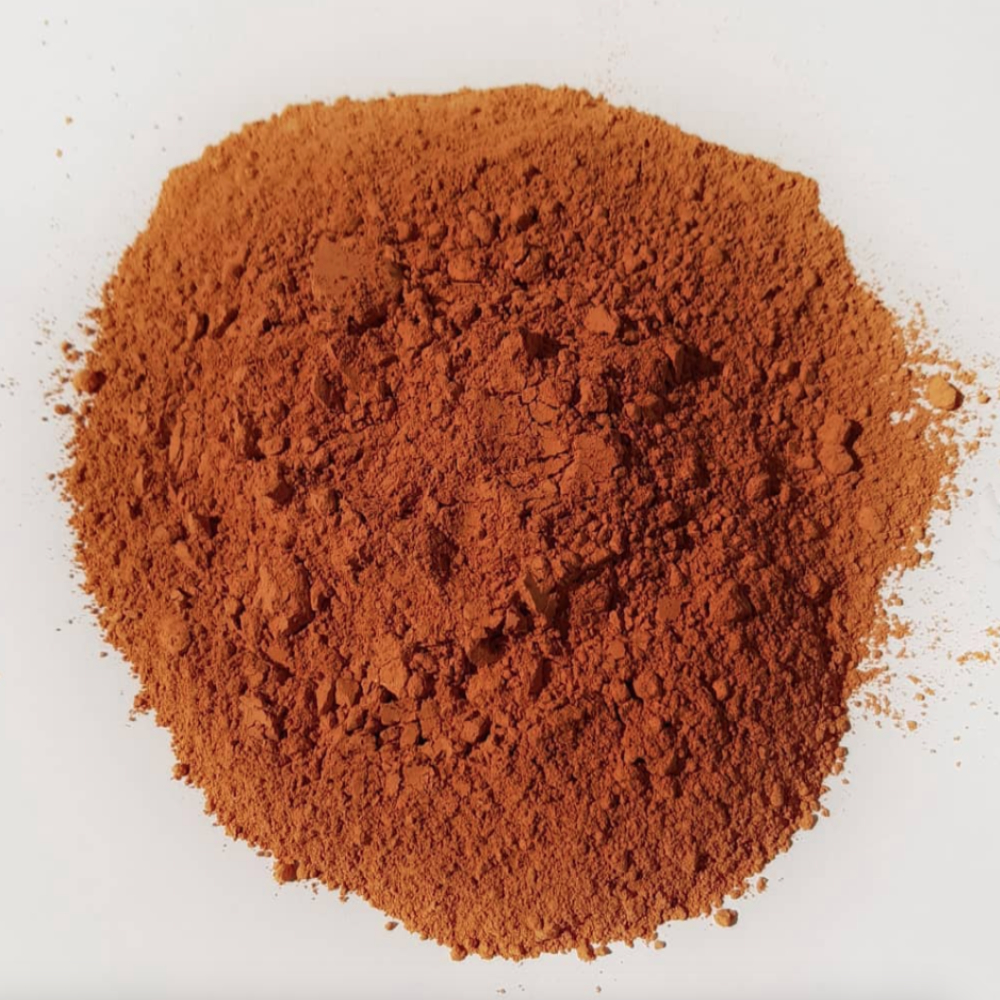
•Mixtures of kaolinite, illite, quartz and iron oxides.
•TO or TOT structure, depending on origin.
•Properties:
•Plasticity: Moderate to high.
•Shrinkage: Moderate.
•Colour: Fires red or brown because of its iron content.
•Uses in Handmade Ceramics:
•Ideal for rustic pieces, such as vases and sculptures.
•Combined with grog to reduce shrinkage.
How to Choose the Right Clay
The choice of clay depends on what you want to achieve aesthetically and functionally:
•Need high plasticity for throwing or handbuilding?
•Use clays rich in montmorillonite, or add small quantities of bentonite to a base such as kaolinite.
•Want to avoid cracks during drying or firing?
•Choose low-shrinkage clays, such as kaolinite or illite.
•Looking for rustic visual effects?
•Try red clays or mixtures containing biotite for distinctive tones.
Morphology and Composition: What Does This Mean for You?
•Expanding Layered Structures (TOT, such as montmorillonite):
•Highly plastic, but with greater shrinkage.
•Compact Structures (TO, such as kaolinite):
•Less plastic, but with a lower risk of deformation.
•Cations and Impurities:
•Influence colour and reactivity, allowing adjustments to the final aesthetic.
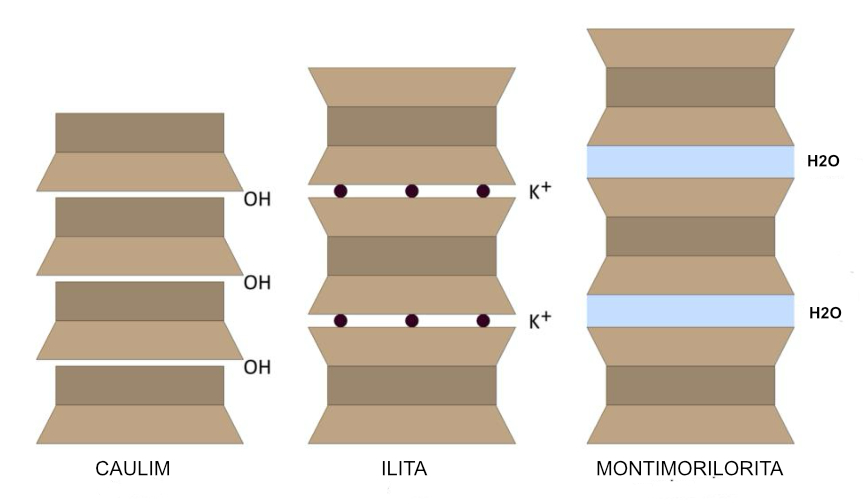
Types of clay. Source: Linda Bloomfield.
Handmade ceramics are both a science and an art. Knowing the chemistry and morphology of the clays you use can transform your practice. By balancing the properties of available clays, you can create unique pieces that combine functionality and beauty.
Enjoyed this post? Leave a comment or share your experiences with clays on our blog!
Source:
- Bloomfield, Linda. Technolfile, Ceramics Monthly. Aug, 2016.
About the Author: Gustavo Assis

Related Posts