
Ceramics of China’s Song Dynasty – Part I
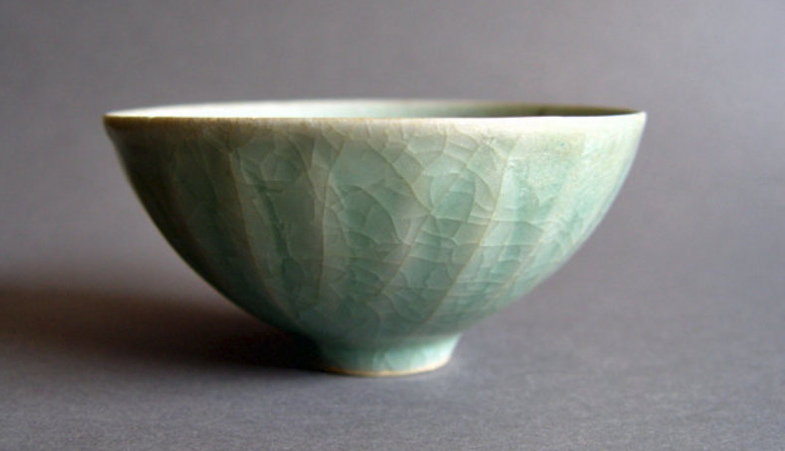
The potter Bernard Leach wrote that the Song dynasty represented “one of the noblest achievements in pottery”. Other writers, too, describe this period as a “golden age” of ceramics.
I decided to study the subject further and was surprised by the wealth of extraordinary pieces, the diversity of techniques and glazes, and their continuing influence on ceramic production.
I would like to share this discovery with you, and I hope you enjoy it!
Introduction
Historically, China’s Song or Sung dynasty (宋朝) is divided into two periods: Northern Song (960–1127) and Southern Song (1127–1279). Although it faced attacks from Mongol rivals and the Jin dynasty, it was also a period of considerable advances and relative prosperity for its immense population.
General Characteristics
Broadly speaking, Song-dynasty ceramic forms are simple and restrained compared with those of the preceding and following periods. Their glazes tend to be monochrome, subtle and fluid, integral to the forms they cover, with depths of colour and texture that invite touch as well as contemplation.
Song aesthetic sophistication was accompanied by remarkable inventiveness, producing a range of classic wares, each usually associated with a particular region of China. These include the celebrated five court-sponsored kilns: Ru (汝), Guan (官), Ge (哥), Jun (鈞) and Ding (定), as well as Longquan (龍泉) and Yaozhou (耀州窯) celadons, among others. There were also the more everyday Cizhou (磁州窯) and Qingbai (青白) wares, and the strongly characterised Jian (建陽窯) wares. Many of these regional ceramics were so highly valued that they were used to pay annual tribute to the imperial court.
Some Considerations
Although we distinguish between regional kilns, there was considerable diversity of style and technique within each region. Production extended across large areas and involved many craftspeople developing their work relatively independently.
Kilns were also influenced by the successes of others. One kiln might begin copying another’s products, so classification by region, while useful for study, is a simplification that can sometimes mislead us.
Given the abundance of exceptional pieces from this period, I will divide the subject into two posts. Today’s post focuses on northern China; next week’s will look at the south.
This geographical division should not be confused with the historical division between Northern and Southern Song. Although northern kilns lost court patronage when the court moved south, many continued operating after the fall of Northern Song. Similarly, many southern kilns had already been producing ceramics alongside their northern counterparts before the court moved closer to them.
Song-Dynasty Kilns in Northern China
Northern Celadon Kilns
These high-fired ceramics had greyish clay bodies, were decorated in various ways and covered with celadon glaze. They formed a broadly homogeneous group known as northern celadon wares. Production sites have been found in at least three northern Chinese provinces. Notable among them are the ruins of the Yaozhou kilns, an important porcelain-production centre in Hengbao, Shaanxi Province (see map).
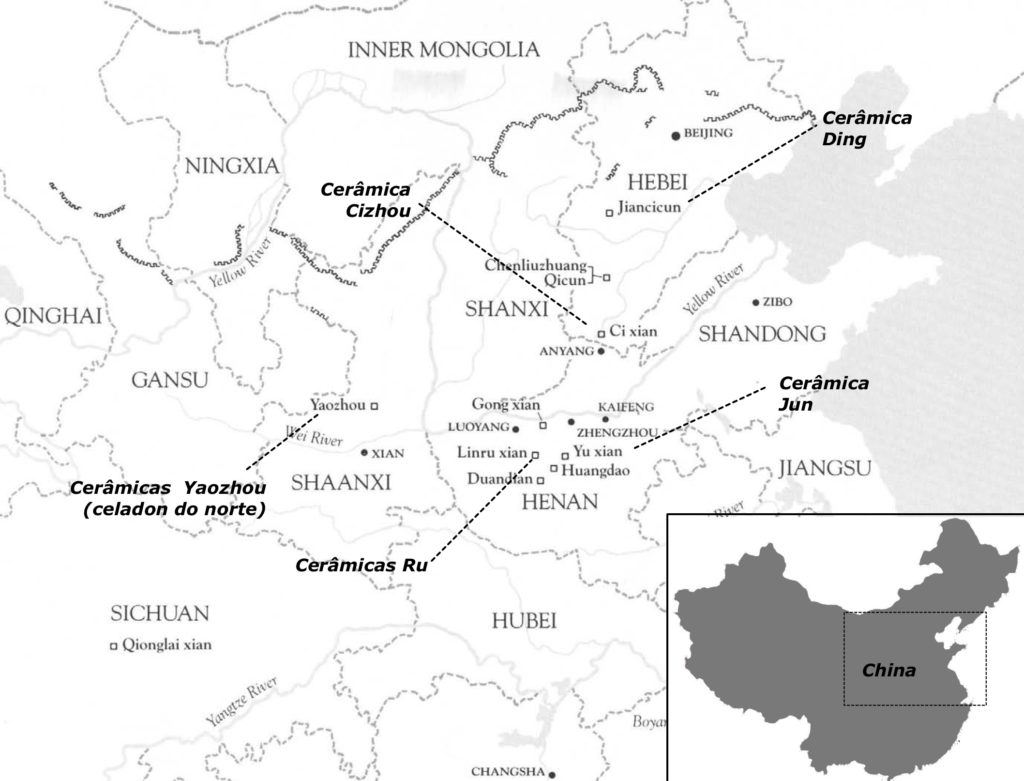
Principal northern kilns during the Song dynasty. Source: A Handbook of Chinese Ceramics.
The Yaozhou kilns were one of northern China’s four principal kiln centres and once extended over five kilometres. Beyond their scale, they produced some of the finest celadon among the northern kilns. Recent studies support the view that they continued operating during the Mongol occupation.
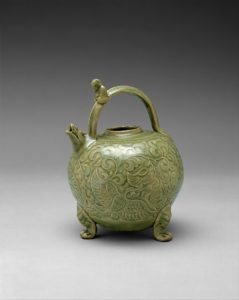
Northern Song dynasty, China. Yaozhou celadon. Height: 21 cm. Metropolitan Museum of Art, New York.
Jun Kilns
Jun or Chun wares are characterised by a thick, opalescent, pale-blue glaze. They were made mainly in Henan Province from the Song dynasty onwards, taking their name from kilns in an area known as Junzhou.
There is considerable diversity in form and colour, but many pieces have graceful, simple and well-proportioned shapes. A distinctive feature of Jun porcelain is its cloudy glaze, containing a low concentration of copper oxide. Its blue wares differed from ordinary celadon, displaying a milky shade of blue.
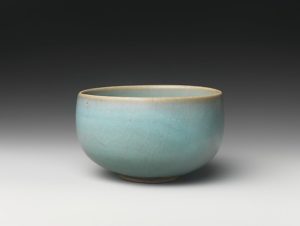
Northern Song dynasty, China. Jun ware. Diameter: 10.5 cm. Metropolitan Museum of Art, New York.
Reduction firing also produced reddish glazes. At times, Jun wares displayed beautiful green tones with violet patches, like clouds at sunset. Their mysterious and unpredictable colours captivated Chinese admirers of the period.
Ru Kilns
Ru kilns were frequently mentioned by the scholars of the time, yet surviving examples are very rare. Fewer than 40 pieces are in the West, because the kilns produced wares for the court for only a little over 20 years.
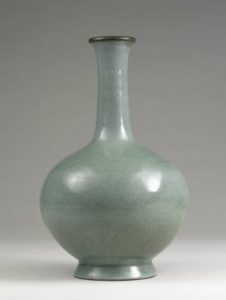
Bottle, Northern Song dynasty, China. Ru ware. Height: 248 mm; diameter: 156 mm. British Museum, London.
The pieces are generally small, no more than 30 cm high. Their bodies are fine and greyish, and they were glazed all over. They rested on extremely fine supports during firing, leaving marks on their bases that early writers described as “sesame-seed-sized”.
Ding Kilns
Ding wares are considered among the most refined of the Song period, representing its taste for restrained decoration. Ding aesthetics favoured elegant form over ostentatious ornament. Because of how the pieces were placed in the kiln, their rims were left unglazed and were often covered with metal such as gold or silver. After the Song court moved south, access to these kilns was cut off, and the court met its needs with southern wares, including Qingbai.
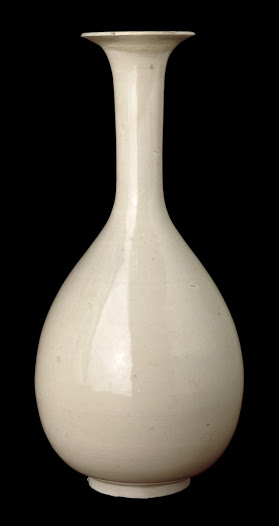
Bottle. Ding ware, China. Northern Song dynasty. Height: 21.90 cm. British Museum, London.
Large quantities of Ding sherds have been found at the main kiln complex in Jiancicun, Hebei Province. During the Song period, the area was administered as Dingzhou, the name from which the wares became known.
Cizhou Ware
Cizhou wares have a rustic appearance and were intended for everyday use. These high-fired, thick-walled ceramics were usually decorated in black on a white or beige ground. Their spontaneous designs show freedom of line and fluidity.
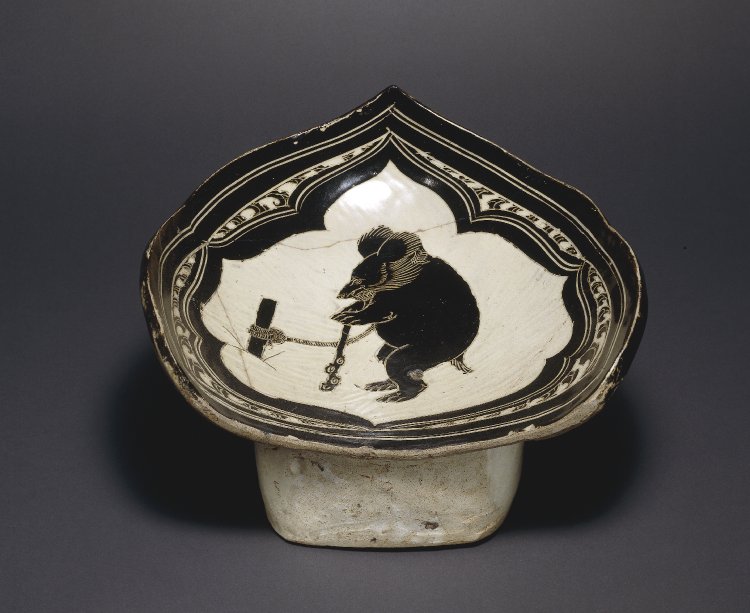
Pillow. Cizhou ware, China. Northern Song dynasty. British Museum, London.
The Jin Period
As noted earlier, many northern kilns continued production after the Jin dynasty displaced the Northern Song in 1127. Jin taste, however, drew inspiration from the Tang and Liao dynasties, which was reflected in ceramic production. The wares of this period can also be seen as lower in quality than those of the Song dynasty.
In the next post, I will continue with Song ceramics produced in southern China. Until then!
Sources:
- Velenstein, Suzanne G. A Handbook of Chinese Ceramics. The Metropolitan Museum of Art.
- Chinese Ceramics. China International Press
- Nilsson, Jan-Erik. Antique Chinese and Japanese Porcelain Collectors’ Help and Info Page. www.gotheborg.com
About the Author: Gustavo Assis

Related Posts

Ola , Gustavo! É de muita riqueza sduas publicações. Grata!
Thank you for reading!
quais as mudanças na produção da cerâmica e porcelana nas diferentes disnastias chinesas?