
Indigenous Ceramics of Brazil – Part I
Hello everyone! :)
This is a subject I have wanted to write about on the blog for a long time.
I managed to get hold of an excellent book on Indigenous ceramics and learnt many interesting things about the subject. I would like to share them with you.
This is the first part of an overview of ceramic production processes described in the sources consulted. The second part considers ceramics in the ritual contexts of particular peoples.
Introduction
This text presents a reading of accounts brought together in the cited sources. The practices described belong to specific contexts and should not be taken as characteristics shared by all Indigenous peoples of Brazil. The diversity of peoples, territories and histories does not allow their ceramic practices to be treated as a single tradition.
I invite readers with more experience of the subject, or knowledge of a particular Indigenous people, to contribute comments and suggestions so that we can share and deepen this knowledge.
Women’s Work
The accounts presented in this overview describe contexts in which vessel making is women’s work, particularly that of married women. This does not establish a rule for every people. In the Waurá example from Mato Grosso, the account mentions restrictions on clay work by pregnant women or mothers of young children, associated with concern for their children.
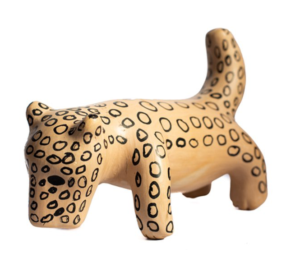
In some communities, however, making pipes is men’s work.
The clay
The accounts presented here include situations in which men locate clay deposits, collect the material and bring it to the village. Collection is described during the dry season, along riverbanks and riverbeds where suitable clays occur. Proximity to these deposits is also mentioned as a factor in choosing new village locations. These descriptions should not be extended indiscriminately to other peoples and territories.
The clay selected should not contain too much sand, which would make the pieces too brittle. It is also left to rest before use, and organic materials—ground roots, crushed bones and so on—or inorganic materials such as mica and feldspar are often added as temper. This reduces plasticity and makes the clay less prone to cracking and distortion.
Forming
Once the clay is ready, the potter arranges everything within reach—clay, water, temper and smoothing tools such as pieces of gourd, shells and pebbles—and sits on a mat or stool.
The most common forming process is coiling. The potter first makes the base by flattening clay into a circular slab. She then rolls clay cylinders back and forth on her thighs or with a board, stacking these coils one above another to build the vessel.
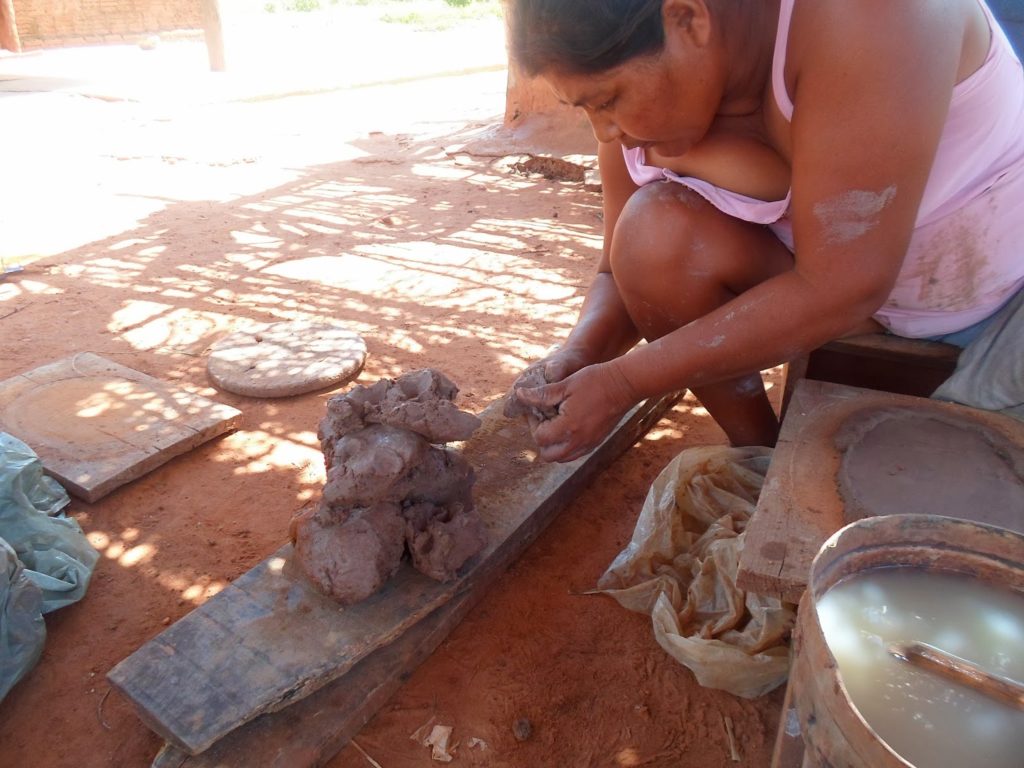
A Terena woman preparing to form pottery. Source: Cerâmicas da Nossa Terra. http://ypuneterena.blogspot.com/
Once the desired form is achieved, the coils are smoothed vertically with the fingertips. This also strengthens the piece by improving the joins between the coils. The formed vessel is then left to dry in the shade for a few days.
Finishing
When the piece is partly dry, surface imperfections are scraped away with shells, pieces of gourd, knives or spoons. The surface is then burnished with smooth pebbles, seeds and similar tools, using saliva or water. This produces a lustrous surface and also helps make the finished vessel less permeable by closing the clay’s pores.
Where appropriate, the potter makes incisions with pointed tools to produce decorative effects such as geometric designs. Handles, spouts and other additions are also attached at this stage.
The piece is then left to dry again before firing.
Before firing, some groups prepare and apply pigments. The Kaingáng, for example, whose territory extends from Rio Grande do Sul to São Paulo, rub hematite onto the vessel to give it a red colour. They rub inajá seeds over the surface to fix the pigment. The Waurá, by contrast, prepare a ball of dark clay with annatto seeds and fire it. The fired ball is crushed, and its powder mixed with water to make a light-red pigment for their ceramics.
Firing
This overview describes firings in open fires, with branches and logs arranged in a cone to distribute heat around the pieces. Flames surround the vessels; some accounts mention supports and firings lasting one or two hours. Turning the pieces and placing embers inside them are also reported. These are descriptions of particular processes, not a definition of the atmosphere or firing method of all Indigenous ceramics in Brazil.
Firing is also governed by various ritual restrictions among Indigenous peoples. Some groups eat only fish during this period; others exclude outsiders or do not fire at the new moon.
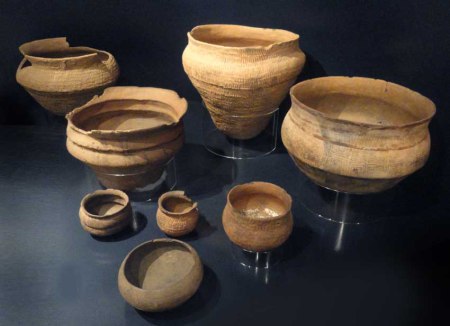
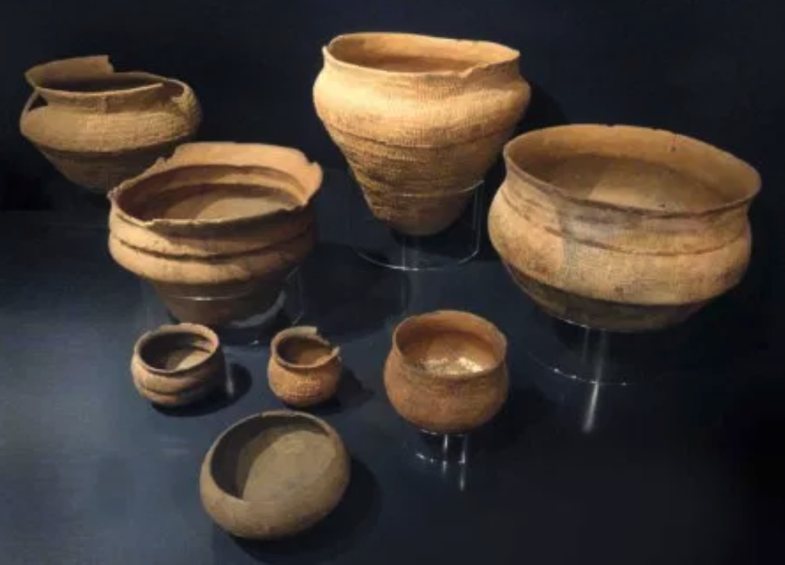
Tupi Guarani ceramics
Painting
Painting after firing is widespread among Indigenous peoples. Many consider a piece unfinished without it. At this stage, the division of labour is less marked, and paints may be organic—derived from genipap, annatto and other plants—or inorganic, such as kaolin and hematite. Fingers or sticks wrapped in cotton may serve as brushes; bird feathers and human hair are used less frequently.
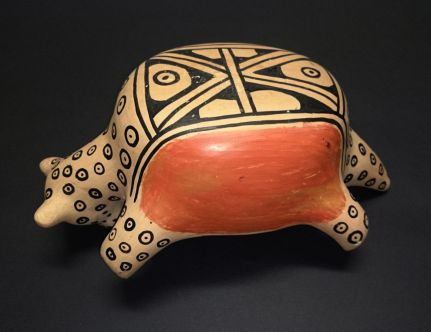
Clay vessel made by the Waurá of the Xingu Indigenous Park. Dimensions: length 29 cm, width 16 cm, height 15 cm. Source: http://www.arteindigena.com.br
Potters have some freedom in their decorative themes but must remain within the broader aesthetic conventions of their own group.
Besides painting, resins are often applied to vessel surfaces after firing. These include resin from jatobá, acacia and simaneiro, jutaí pitch and sorva latex, among others. This treatment makes vessels less permeable and extends their useful life.
Some groups use a second firing in a reducing atmosphere with papaya leaves and other materials to impregnate the surface with waterproofing substances. The vessel becomes black; sometimes selected areas are protected during this reduction firing to create light and dark designs.
After washing with water, the piece is ready for use.
In the next post, I will continue the subject by exploring the role of ceramics in Indigenous rituals!
See you there! ;)
Source:
- Andrade Lima, Tânia in Suma Etnológica Brasileira 2 – Tecnologia Indígena. Edited by Berta G. Ribeiro. Published by Vozes.
About the Author: Gustavo Assis

Related Posts
Amei. Você trouxe uma riqueza de detalhes, abordando cada parte do processo. Parabéns
Thank you for reading!