
Ceramics · Glazes
Celadon
Between history and studio experience.
The Depth of a Colour
From soft greens to deep blues, celadon reveals a long history of ceramic experimentation. From Chinese traditions to my own studio practice, its colours and surfaces invite us to observe the relationships between matter, fire and time.
Its appearance emerges through the interplay of composition, surface and firing conditions.
01 · History and Tradition
A Colour Across Traditions
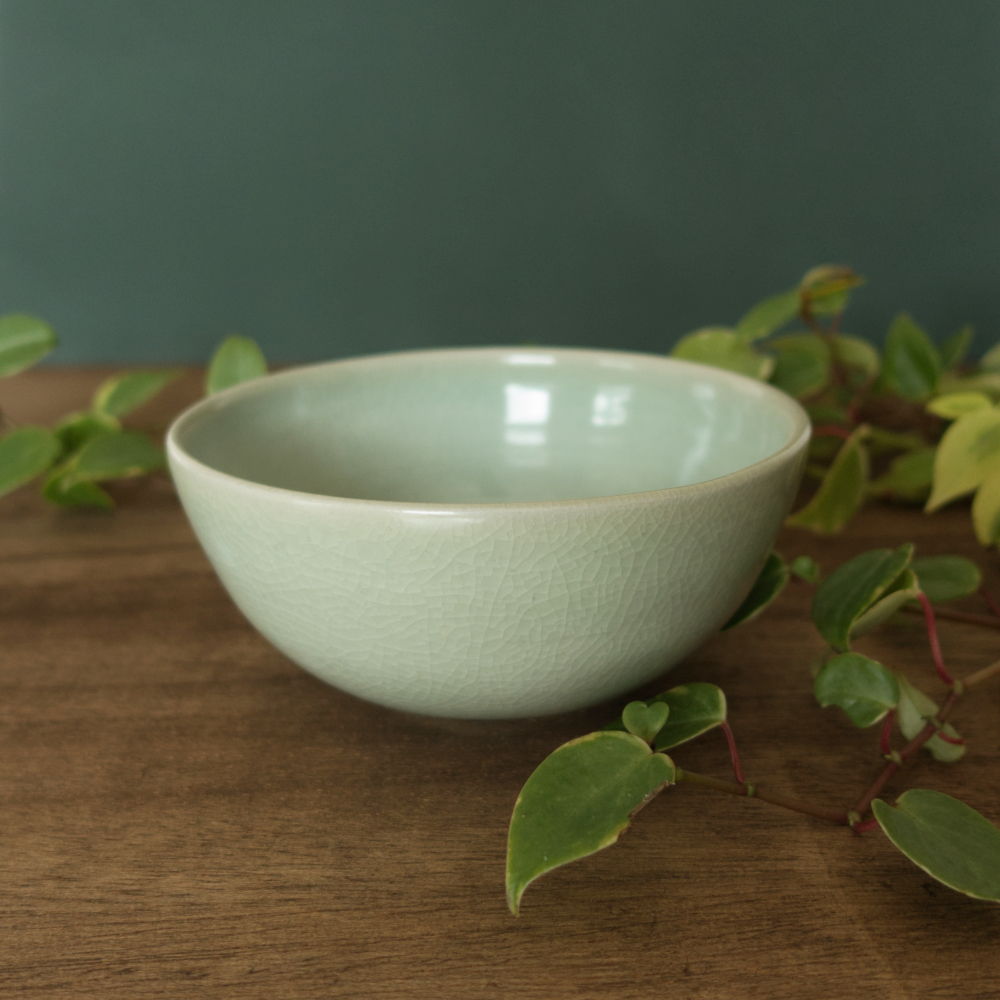
Originating in China, celadon spread across different ceramic traditions in Asia. Its tones, often associated with jade, bring colour, form and surface into a close relationship.
In Japan, this tradition took on other interpretations. The articles gathered here explore its reception and the relationships between glaze composition, application and firing.
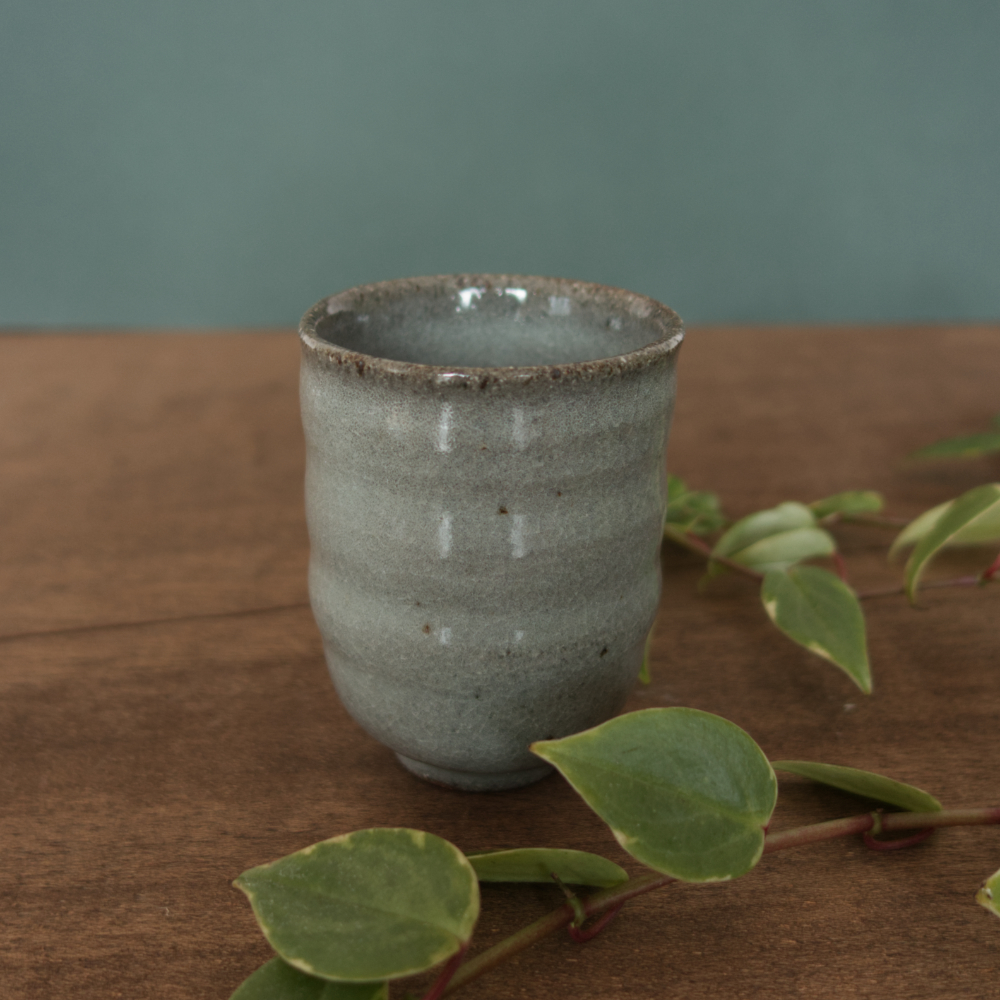
The yunomi shown alongside is a piece from my studio: a contemporary engagement with the tradition of tea vessels.
02 · My Experience with Celadon
Where Glaze Meets
the Clay Body
During my first firing in a gas kiln, tests monitored using cone 6 produced different results on porcelain and terracotta.
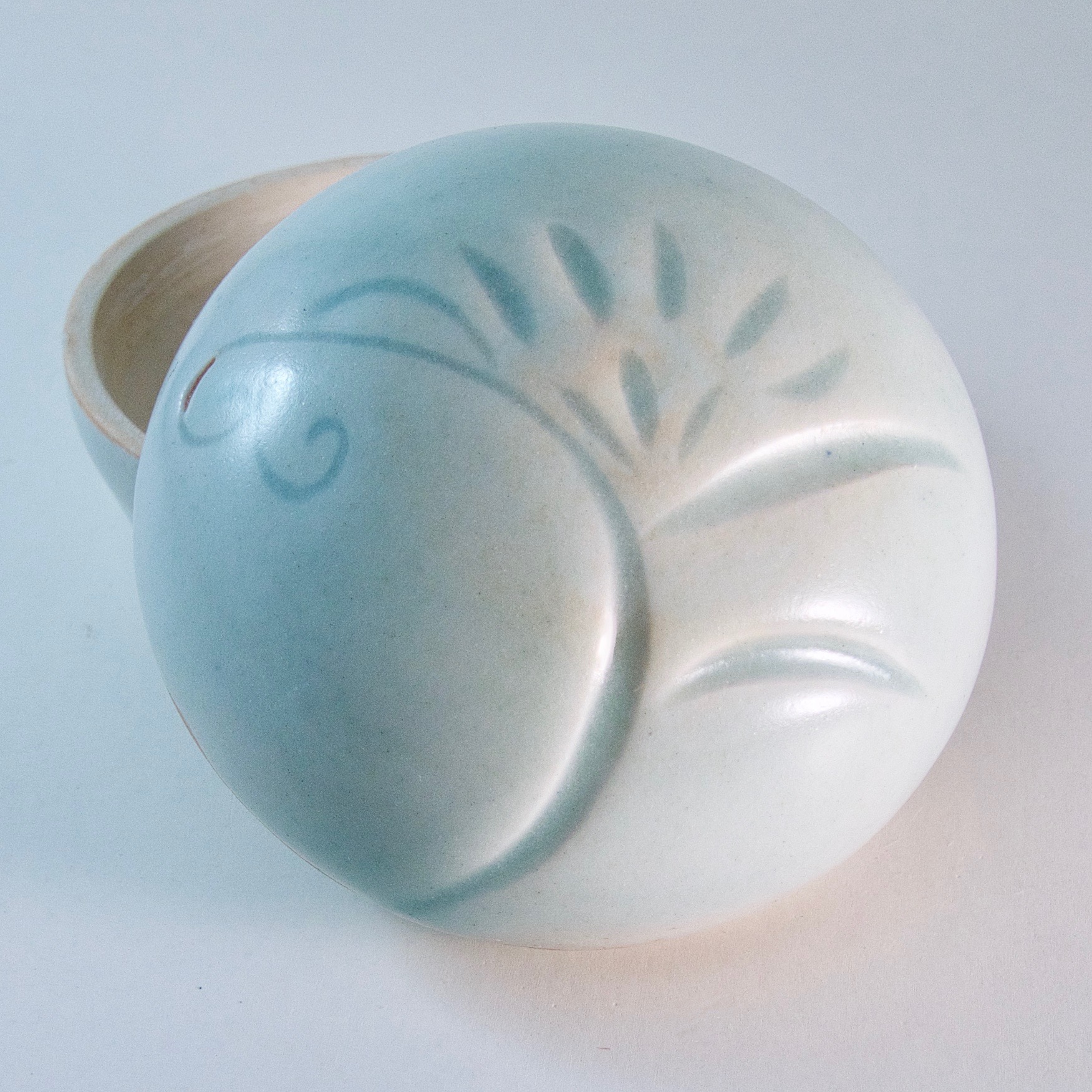
On Porcelain
The celadon produced a good result. The glaze's transparency enhanced the low-relief designs; applying a thicker layer remained a possibility for the next test.
On Terracotta
The colour turned dark grey. I considered the possibility of an interaction with iron in the clay body — a hypothesis arising from that particular experiment, rather than a general conclusion about all celadon glazes.
Glaze composition, layer thickness, clay body and firing conditions need to be considered together. A pyrometric cone indicates the combined effects of time and temperature.
03 · Readings and Experiences
Continuing the Investigation
History, practice and materials science: different ways of approaching celadon.
History and Tradition
The mystical beauty of celadon
Chinese origins, circulation and the meanings associated with celadon surfaces.
The Japanese tradition and its relationships between composition, application and firing.
Studio Experience
Glazes — Results from My First Firing
An account of tests, differences between clay bodies and questions for further experimentation.
Materials Science
Celadon: Reduction, Iron Structure and Colour Formation
A reading on the local environment of iron and the limits of interpretations based on specific samples.