The mystical beauty of celadon
Celadon is a type of ceramic ware that originated in ancient China. It is known for its jade colour, produced by the glaze applied to the ceramic surface. In Chinese, celadon is written 青瓷, transliterated as “qing ci”, meaning “green porcelain”.
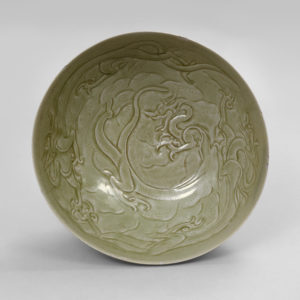
Bowl with dragons among waves.
Five Dynasties period (907–960 CE), China, 10th century. Metropolitan Museum, New York.
One explanation for the Western use of the word “celadon” traces it to the 17th-century French pastoral novel L’Astreé. Written by Honoré d’Urfé, it features a young man named Céladon who is described as wearing green.
The origins of celadon
The history of celadon predates d’Urfé by many centuries. According to one source, celadon production began during the Five Dynasties and Ten Kingdoms period, at some point in the 10th century CE.
Another source suggests an earlier date, placing its first appearance in the 7th century CE, during the Sui or Tang dynasty. The celadon of this period developed from an earlier ware, Yueh, produced during the Six Dynasties, a collective term for six Chinese dynasties beginning with the Three Kingdoms and ending with the Northern and Southern Dynasties.
Korean celadon
Whenever production began, celadon became popular among the Chinese and beyond their borders. For example, celadon production spread to the Korean peninsula during the 9th and 10th centuries CE. Before this, most pottery made there was unglazed, high-fired ware. Glazing is thought to have occurred occasionally in Korea during the Silla period, from the 7th to the 10th century CE.
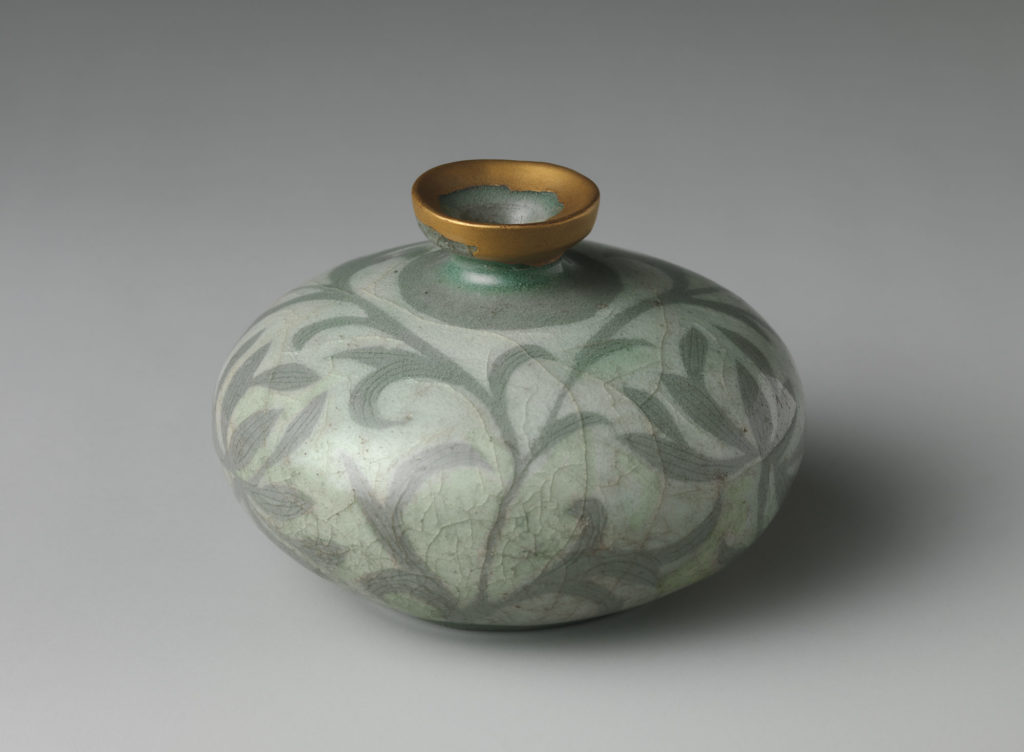
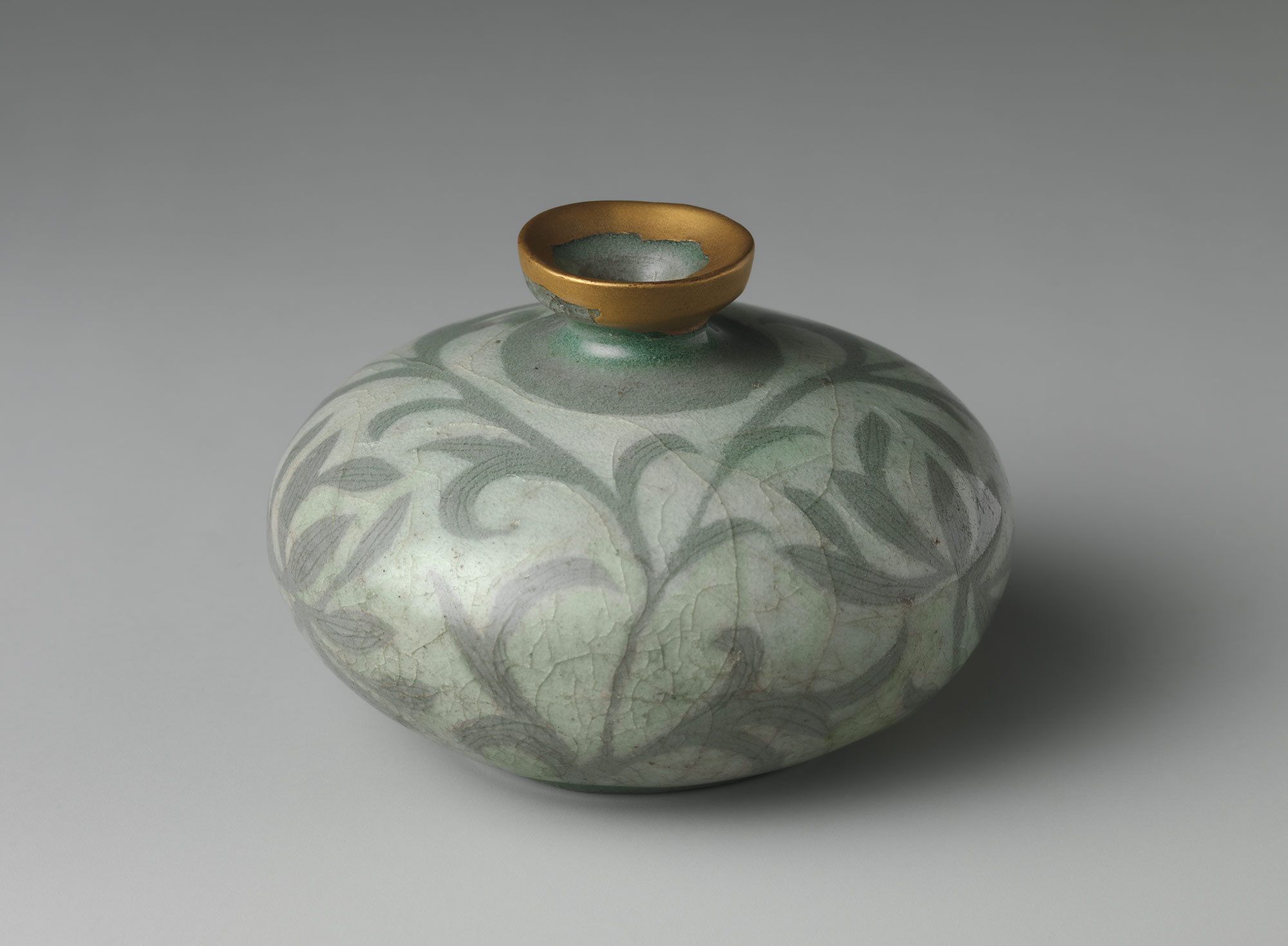
Korean celadon. Goryeo dynasty, 12th century. Oil bottle with peony-leaf decoration. Metropolitan Museum, New York.
It was during the succeeding Koryo/Goryeo dynasty, however, that celadon began to be produced on the Korean peninsula. Besides signalling technological progress in ceramics, its manufacture marked a change in how Koreans viewed pottery. Previously, ceramics had served both functional and symbolic purposes. With the introduction of celadon, ceramics came to be appreciated for their aesthetic value.
A valuable trade commodity
Celadon's popularity certainly did not stop in Korea. Shipwrecks discovered in the South China Sea reveal a market for celadon beyond China. Demand was probably substantial enough to encourage production elsewhere when Chinese supplies ceased. In 1371, the first Ming emperor, Hongwu, prohibited his subjects from engaging in overseas trade. Around the same time, celadon production began in Thailand. Chinese immigrants settled in the region began making it to meet a demand no longer served by imports.
Celadon was unquestionably appreciated for its beauty, but its appeal went beyond aesthetics. Because of its jade colour, it was regarded as the mineral itself and believed to share its magical properties. For example, celadon was thought to ring when danger approached and change colour if food or drink placed in it was poisoned.
Another reason celadon was so highly valued may have been the difficulty of making it. Production could take between four and ten weeks, depending on the size of the vessel and the complexity of its design. The process was also relatively complex, involving steps that had to be followed precisely to obtain the desired result.
For many centuries, celadon was highly regarded at the Chinese imperial court. The desire for these art objects later spread through trade and cultural exchange. Even today, people cherish these green ceramics, whether found in antique shops or inherited.
In the next post, I will discuss celadon glaze and its techniques in Japan in more detail. See you then!
Sources:
- Asia Society, 2007. Korean Ceramics – http://www.asiasocietymuseum.org/region_results.asp?RegionID=5&CountryID=13&ChapterID=35
- China Virtual Tours, 2014. A Brief History of Ceramics – http://www.chinavista.com/experience/ceramics/ceramics.html
- Lee, S., 2003. Goryeo Celadon – https://www.metmuseum.org/toah/hd/cela/hd_cela.htm
- Nanhai Marine Archeology Sdn. Bhd., 2016. Pottery – http://www.mingwrecks.com/pottery.html
- Welcome to Chiangmai and Chiangrai magazine, 2014. The Making of Celadon – http://www.chiangmai-chiangrai.com/making_of_celadon.html
- www.korean-arts.com, 2016. The Age of Celadon – http://www.korean-arts.com/about/age_of_celadon.htm
- www.visual-arts-cork.com, 2016. Chinese Pottery (18,000 BCE – 1911 CE) – http://www.visual-arts-cork.com/east-asian-art/chinese-pottery.htm
- Tōjiki, o yakutachi jōhō. Seijiyū. http://touroji.com/yuuyakunosyurui/seijiyuu
- Mingren, Wu. Celadon appreciating pottery its aesthetic value and magical qualities. http://www.ancient-origins.net/artifacts-other-artifacts/celadon-appreciating-pottery-its-aesthetic-value-and-magical-qualities?page=0%2C1
About the Author: Gustavo Assis

Related Posts