
Glaze Theory – Part II

Continuing our study, today I am writing about glaze theory with an emphasis on chemical elements. This is a technical subject requiring basic chemistry, but I will explain it from the beginning. If the detailed sections feel heavy, you can skip to the more potter-specific discussion in the middle and latter part of the post. If you have questions, please use the comments below.
The Chemical Elements
The Big Bang, which marked the beginning of our universe, created all matter. That matter is transformed inside the atomic furnaces of stars. Light elements such as hydrogen fuse into elements such as helium in stars the size of our Sun. Heavier elements, such as lead and uranium, are created when supermassive stars explode as supernovae. The remnants form cosmic dust and nebulae, eventually gathering into new stars and planets. As scientist Carl Sagan said: “We are all made of stardust.”
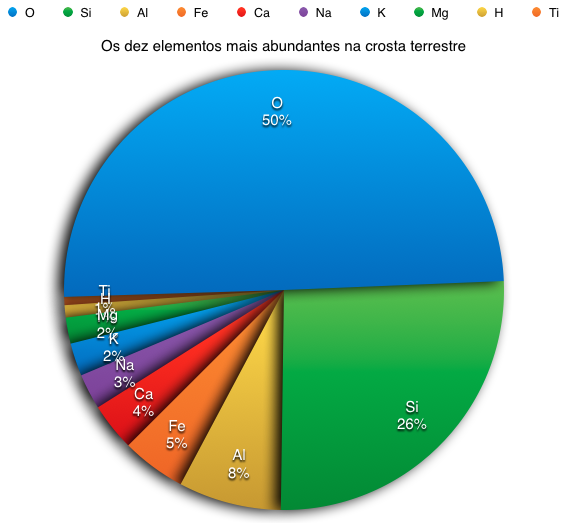
We now know of more than 90 naturally occurring chemical elements. Potters are particularly interested in those in the Earth’s crust, because they make up clays and glazes. The most abundant are oxygen (symbol O), silicon (Si) and aluminium (Al). Molecular oxygen (O2 and O3) is a gas, but oxygen is abundant in crustal minerals because of its remarkable ability to bond with almost any other element to form oxides, which I will discuss later.
Besides these three elements, iron (Fe), calcium (Ca), sodium (Na), potassium (K) and magnesium (Mg) are also abundant in the Earth’s crust.
Atomic Structure
The modern atomic model is very complex. For our purposes, protons, with a positive charge, and neutrons, which are neutral, occupy the centre of the atom, or nucleus, while negatively charged electrons orbit around it. Roughly speaking, this resembles a planetary model, with planets circling the Sun.
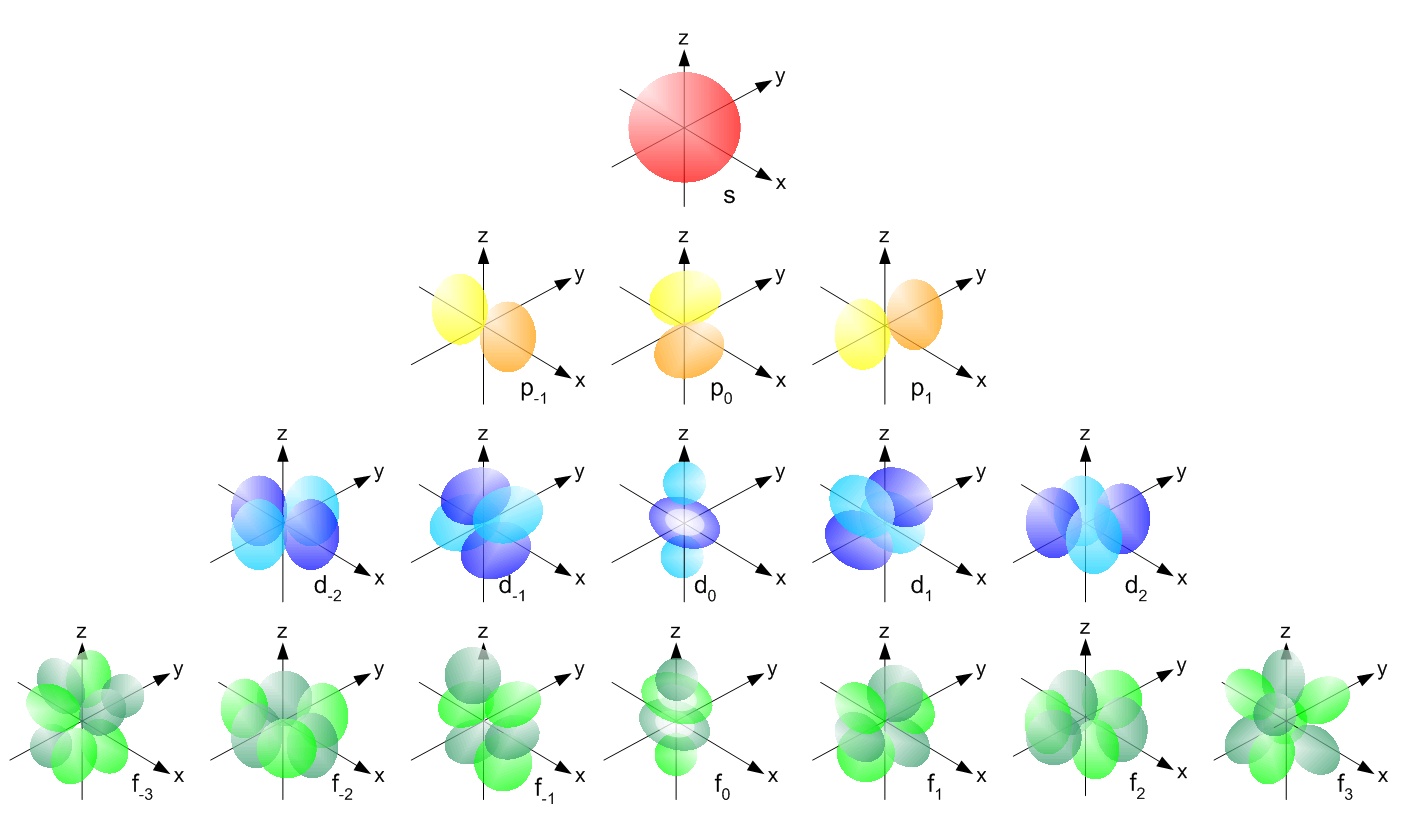
However, Heisenberg’s uncertainty principle makes it impossible to determine the electron’s exact orbit. The models of electron orbits, called orbitals in quantum mechanics, indicate regions where we are more likely to find electrons.
Electrons occupy orbitals that can hold a limited number of them. Once an orbital is full, electrons occupy another. Depending on their shape, orbitals are designated s, p, d and f. After electrons fill all possible orbital types in a shell, the filling cycle repeats. We call this cycle a period.
An atom’s number of protons defines its element: hydrogen has one, helium two, lithium three, and so on. A stable atom has the same number of protons and electrons.
We usually group atoms according to the number of electrons in their outermost, highest-energy shell, because they display similar chemical behaviour. The number of electrons an atom needs to complete its outermost shell is called its valence.
According to the octet rule, atoms tend to complete their outermost shell with eight electrons. They can share, donate or receive electrons, depending on how many they need to gain or lose to become stable. These relationships give rise to molecules. Noble gases do not react with other elements and are naturally stable because their outermost shells contain all eight electrons.
Example:
Chlorine has 7 valence electrons and sodium only 1. Sodium therefore loses 1 electron, giving chlorine 8, and both become stable in this arrangement. This is table salt, NaCl, whose formation follows the octet rule.
This also explains why oxygen is so reactive, forming compounds with almost all the elements potters use in glazes: it readily accepts electrons.
The Potter’s Periodic Table
The periodic table is arranged in columns, called groups, representing the number of electrons in each element’s outermost shell, as noted earlier. The rows represent periods, or the number of shells, giving the table its name.
Periodic table showing the elements most commonly used by potters:

Elements and Their Uses in Glazes
Now that we have covered the basics, let us apply this knowledge to glaze chemistry.
Alkali and Alkaline-Earth Metals
The fluxes, used in ceramics to help glazes melt (see Part I), are mostly found among the alkali and alkaline-earth metals on the left of the table.
Alkali metals are very reactive in their pure form, and their oxides are powerful fluxes. They also combine with carbon and oxygen in compounds called carbonates, which are more soluble. Lithium (Li) is the most powerful flux, and its low atomic weight means only a small amount is needed to melt a glaze fully. Its melting point is high compared with the other members of its group, but once it melts, it melts completely. This element also has the group’s lowest coefficient of expansion, so it is used in thermal-shock- and fire-resistant ware.
Potassium (K) and sodium (Na) oxides are widely used as primary fluxes at all temperatures. They are highly reactive and have high coefficients of thermal expansion, which I will discuss in Part IV. Sodium oxide is used in low-temperature glazes. It is water-soluble and is therefore introduced through feldspar or frit. It is a stronger flux than potassium but begins to volatilise at 1,200ºC, potentially causing bubbles in the glaze.
Potassium oxide behaves somewhat differently and has a lower coefficient of expansion. Although less reactive, it begins to act at 750º C and acts consistently at all temperatures because it does not volatilise. It is more viscous and gives the piece greater strength, but cannot be used without an auxiliary flux, as the glaze may become brittle.
Alkaline-earth constituents are used as secondary fluxes. Together with other constituents, they can promote melting of the mixture. A lower melting temperature does not, by itself, establish a eutectic composition; I explain this distinction in the next post.
Calcium (Ca) is a principal flux at medium and high temperatures. Below 1,100º C it is not a reactive flux, but contributes glaze hardness and acid resistance, and surrounds lead oxide, reducing its solubility. It stabilises the sodium–silica interaction, improving glaze durability and reducing crazing. Above 1,100º C it becomes an active flux. Its consistent action throughout firing makes it important in almost every glaze.
Magnesium (Mg) is used for satin glazes and has a low coefficient of expansion. Barium (Ba) can be used above 1,175º C to produce matt glazes. However, barium carbonate, the compound supplying it, is toxic if swallowed and was formerly used as rat poison. Strontium (Sr) can substitute for it as a non-toxic flux with properties between calcium and barium. Both strontium and barium can be used as low-fire fluxes if incorporated into frits.

Barium and strontium preserve brighter colours than magnesium and calcium, which tend to diminish glaze colour.
Transition Metals
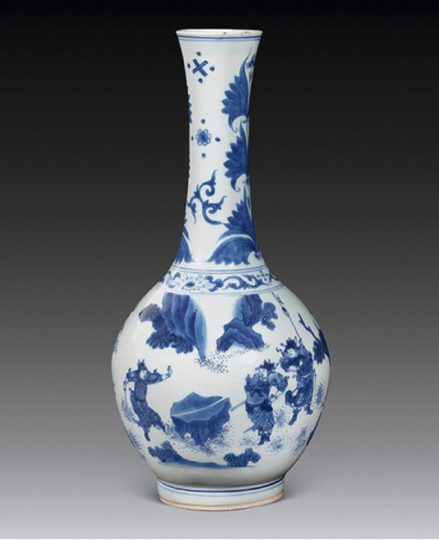
Because their d orbitals are incomplete, transition metals can have different oxidation states depending on their surroundings. This also gives them strong colours, a property potters exploit mainly as colourants, giving glazes their colours. Common colourants are the lower-atomic-weight elements, including titanium (Ti), vanadium (V), chromium (Cr), manganese (Mn), iron (Fe), cobalt (Co), nickel (Ni) and copper (Cu). Many are amphoteric, able to react as acids or bases. Cobalt was once highly valued as the principal ingredient in the underglaze decoration of celebrated Chinese blue-and-white porcelain.
Manganese and iron have several valences. For example, red ferric oxide, Fe2O3, is acidic and refractory, while black ferrous oxide is a basic flux.
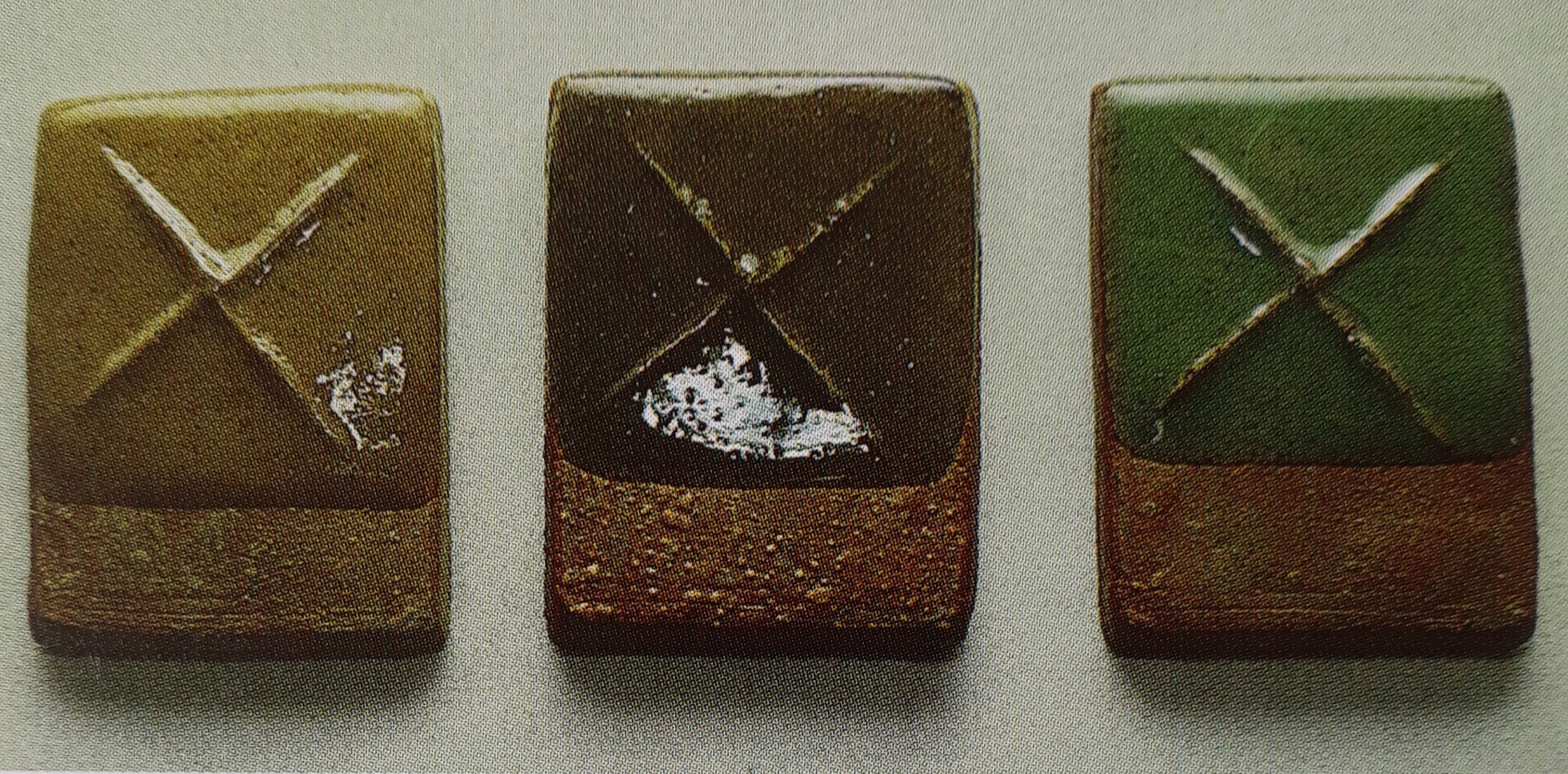
The kiln may contain more or less oxygen depending on the firing. With sufficient oxygen, it is an oxidation firing; with insufficient oxygen in the chamber, it is a reduction firing. Copper oxide can produce dramatically different colours: green in oxidation and red in reduction. Iron can similarly be yellowish in oxidation and green or blue in reduction.
Although in the same group, zinc (Zn) is not technically a transition metal because its d orbital is completely filled. It is used as a flux at mid-temperatures rather than as a colourant. In the next row are zirconium (Zr), used to opacify glazes, and cadmium (Cd), used in yellow and red glaze pigments. Molybdenum (Mo) and tungsten (W) are used in iridescent crystalline glazes.
Gold (Au), silver (Ag) and platinum (Pt) are used in ceramic painting.
Lanthanides (Rare Earths) and Actinides
Cerium (Ce), praseodymium (Pr), neodymium (Nd) and erbium (Er) are seldom used in ceramics, but when they are, they colour glazes. Praseodymium is used with zirconium silicate to produce yellow. Its oxide melts at 932º C and is very toxic.
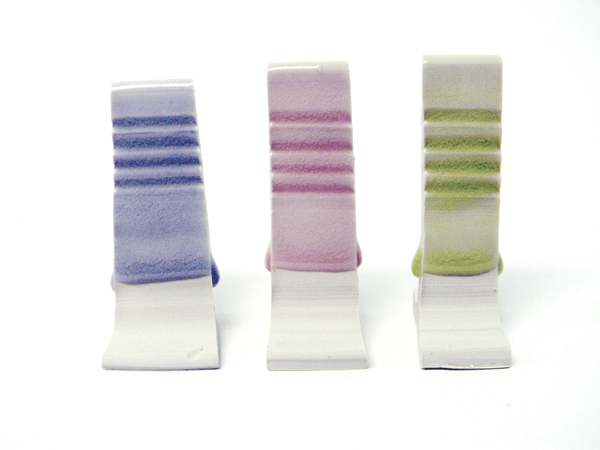
Other lanthanides can produce fluorescent colours, but only under ultraviolet light.
Among the actinides, uranium (U) was used in the early 20th century to produce pale-yellow or orange glazes, but was abandoned because of its radioactivity.
Other Metals
The other metals, or post-transition metals, share the shiny metallic appearance of transition metals but are weaker and more malleable.
Aluminium is very important to potters. It is abundant in the Earth’s crust, a constituent of clays and used as a stabiliser, making the glaze more viscous. It is present as amphoteric alumina, or aluminium oxide, with a high melting point of 2,050º C.
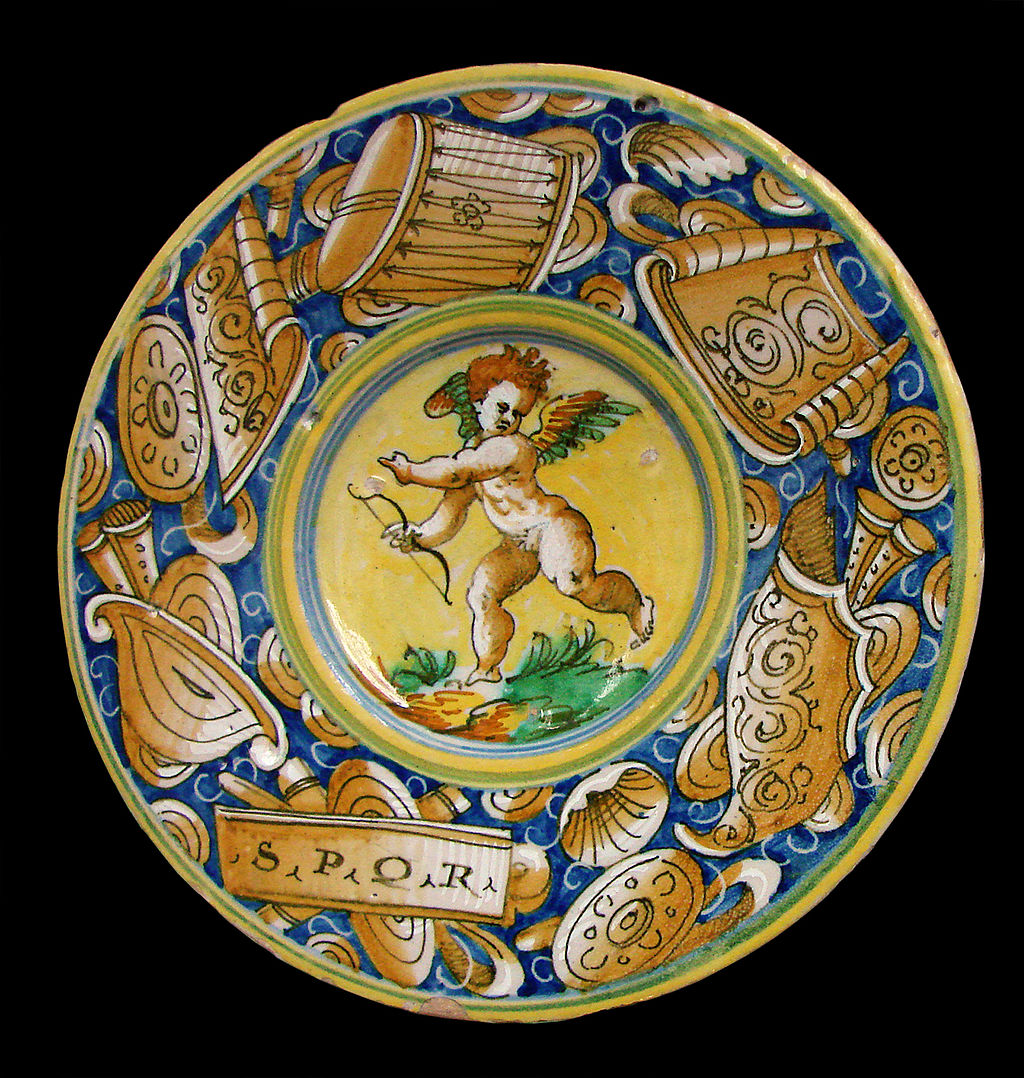
Tin (Sn) is mainly used as an opacifier and was widely used to provide the white ground of majolica.
Lead oxide (PbO) was widely used as a low-temperature flux because of its low melting point. Owing to its toxicity, it is now being replaced by frits based on other constituents, including barium and lithium.
Non-metals
The non-metals include boron (B), which acts both as a flux and a glass former. Silicon (Si) is very important in glazes because it is the principal glass former. Silica, its oxide, is a constituent of many minerals. As discussed in Part I, its melting point is high, but fluxes can lower the melting temperature of the mixture; this does not mean that every such mixture is eutectic (I explain the distinction in the next post). Silica is an acidic oxide that reacts with alkali fluxes.
Carbon (C) plays a supporting role in many compounds used by potters. In carbonate form (carbon oxide), it combines with various alkali and transition-metal elements. During firing, it volatilises as carbon dioxide (CO2), releasing gas as the glaze forms.
Phosphorus (P) is used as a flux and opacifier in high-fired ceramics. This group also includes oxygen (O), which is very reactive and present in most glaze constituents as oxides or carbonates.
Selenium (Se) is used as an orange and red glaze colourant.
Next week, I will write more about the chemical characteristics of glaze constituents, their reactions during firing and the unity molecular formula.
Until then!
Sources:
- Bloomfield, Lisa. Chemistry for Potters. Ceramics Monthly, February 2016.
- Fernandes, Tácito. Teoria de prática de esmaltes. https://www.facebook.com/notes/tcito-fernandes/teoria-de-prtica-de-esmaltes/2247493835871/
- Britt, John.The Complete Guide to Mid-Range Glazes. Ed. Lark, NY.
- Hamer, Frank and Janet. The Potter’s Dictionary: of Materials and Techniques. Sixth edition. Bloomsbury.
About the Author: Gustavo Assis

Related Posts

Excelente texto. Fácil compreensão… Pena que algumas figuras não estão abrindo. A tabela periódica do ceramista, por exemplo. Fiquei na saudade! Mas obrigada pelas informações. Muito úteis. Parabéns.
Oi Lili, obrigado pela leitura! Quanto às imagens, eu conferi o post, abrindo no celular, tablet e desktop e em diversos browsers e todas as imagens abriram. Verifique a configuração do seu computador ou espere um pouco para a imagem carregar. Dependendo da conexão pode demorar. Espero que isso resolva!
Obrigada, Gustavo,
ótima e simples sua explicação sobre queima por oxidação e redução. Não encontrava isso em lugar nenhum. Valeu!
Thank you very much for reading!
Ao começar a entender para que servem e como funcionan os elementos, passei a simpatizar com a química. Valeu Gustavo.
Obrigado Eudes pela leitura!
Muito esclarecedor e de fácil compreensão, Gustavo. Obrigada, me ajudou bastante
Muito obrigado Bel pela leitura!
Nossa!!!!
Prof. Nao li tudo ainda mas, desde já quero externar minga emoção ao ler a introdução.
Gratidão ao universo pela oportunidade.
Realmente um material maravilhoso! É um prazer ler e aprender. Parabéns!!
Obrigado Celia pela leitura!
Texto muito claro sobre os elementos que compõem os esmaltes. Estou indo bem devagar e aprendendo aos poucos sobre os esmaltes cerâmicos. Seu artigo é ótimo e vou continuar a ler e tirar minhas dúvidas!!!! São muitas!!!
Obrigado Valéria pela leitura!
Estou lendo seu post no futuro! Estamos em 2024 e estou aprendendo muito sobre esmaltes com voce. obrigada Gustavo do passado que compartilhou tantas informações conosco.
O Gustavo do presente te agradece!
Olá Gustavo, ótimo texto e esclarecedor para quem tem e quem não tem conhecimento prévio em química! Fiquei com uma dúvida: esses esmaltes em utensílios domésticos de cerâmica possuem riscos de contaminarem os alimentos ou água que os contém para usos na rotina a longo prazo?
O risco existe por isto é importante realizar testes e/ou usar matérias-primas não tóxicas.
Muito esclarecedor saber sobre cada matéria prima. Fuça mais fácil formular esmaltes.
Obrigado por seu empenho.
Thank you very much for reading!
Estou lendo os teus post, muito bem explicativo, estou entrando agora no mundo da cerâmica e procuro informação para ter conhecimento das reações dos esmaltes. Gratidão por compartilhar
Agradeço a leitura!
Os esmaltes cerâmicos são a prova irrefutável que viemos das estrelas, formados numa lenta evolução pelos elementos que compõem nosso universo e toda a natureza. Todo ceramista creio, tem um amor particular pela natureza em si , pois é ela a mãe de todos nós.
Excellent!
Boa tarde Gustavo! Primeiramente gostaria de agradecer pelo conteúdo muito didático e detalhado.
Surgiram algumas dúvidas durante a leitura dessa postagem e ficaria muito grata se pudesse me ajudar.
Quando você menciona que o sódio e o potássio são muito usados como fundentes principais em todas as temperaturas, mas depois que o sódio volatiliza acima de 1200 graus, podendo criar bolhas no esmalte e por isso ele é usado em esmaltes de baixa temperatura. Isso significa que em temperaturas de p.ex. 1220, 1240 graus, é preferível evitar o sódio, ou usar ele em menor quantidade que outros fundentes?
Abraço!