Copper in Reduction: The Secret of Brilliant Red Ceramics
Hello everyone!
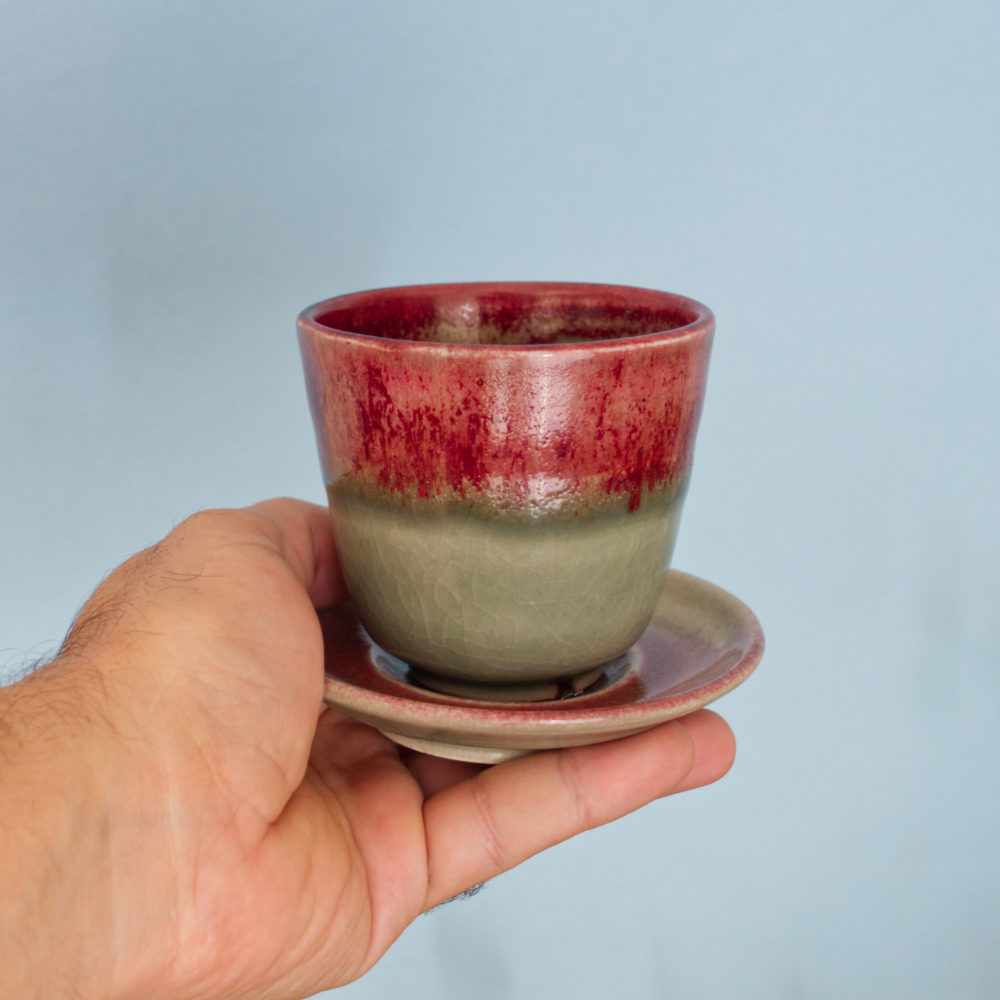
I have always been fascinated by the results I have achieved using copper in glazes fired in a gas kiln under a reducing atmosphere. Few effects are as challenging and fascinating as the brilliant red produced by glazes containing reduced copper.
But what lies behind this magic? Why is the colour so difficult to achieve? Let us explore the science behind it.
Why Does Reduced Copper Produce Red?
During reduction firing, with little oxygen present, copper ions (Cu+2 or Cu+) are transformed into metallic copper (Cu⁰). This metallic state not only changes copper's chemical properties but also creates nanoparticles that interact with light in a distinctive way, producing the vibrant red colour.
The Role of Copper Nanoparticles
Metallic copper nanoparticles are small clusters of copper atoms that form in the glaze during firing.
These nanoparticles exhibit a phenomenon called surface plasmon resonance (SPR). When light falls on the glaze, electrons at the nanoparticles' surfaces vibrate in response to certain light frequencies, absorbing blue and green. The result is an intense, brilliant red reflected towards our eyes.
Why Do We Use Tin Oxide (SnO₂)?
To achieve the desired shade, many glazes contain tin oxide (SnO₂). It acts as a nucleating agent, creating sites where metallic copper particles can form. This helps to:
- Control particle size:
Small particles produce brilliant red, whereas large particles produce dull browns or blacks.
- Distribute copper evenly:
SnO₂ prevents excessive clustering, ensuring a homogeneous glaze.
Factors Influencing the Result
Reducing copper to achieve brilliant reds is notoriously difficult. Here are some reasons why:
- Kiln atmosphere:
Reduction at the right temperature is essential. Without sufficient oxygen, copper is reduced to its metallic state (Cu⁰). In an oxidising atmosphere, copper remains as Cu+2, producing green or turquoise glazes. Despite the presence of tin oxide, nanoparticle size is controlled above all through the potter's experience during firing.
- Temperature:
High temperatures allow nanoparticles to form and stabilise.
- Cooling rate:
Slow cooling helps control particle size, ensuring the desired shade.
Science and Art, Hand in Hand
Reduced copper red is a perfect example of chemistry intertwined with ceramic art. Every detail of the glaze recipe and firing process influences the final result, allowing potters to create unique pieces rich in history.
So, next time you admire a vibrant red glaze, remember: behind that beauty lie careful work and the fascinating world of metallic copper nanoparticles!
About the Author: Gustavo Assis

Related Posts