
Japanese Kilns
Hello everyone!
Today I will write about the types of kilns formerly used in the Japanese archipelago. Although many Japanese potters have adopted easier-to-use electric kilns, some still maintain traditional methods. These kiln designs have also spread around the world, with examples found in many places, including Brazil.
Despite construction methods dating back hundreds of years, these kilns are highly efficient and leave beautiful effects on the pottery.
Definition
A kiln is the structure in which ceramic pieces are fired. Their appearance changes according to its shape, firing method, oxygen supply and rate of temperature increase. Firing is the most important stage of making pottery and, for potters, undoubtedly the one that inspires the greatest anticipation and anxiety.
Types of Kilns
Anagama
Literally, the Japanese name combines the words for hole and kiln.
This tunnel-shaped kiln is dug into sloping ground and may be underground or partly underground. It was brought to Japan by Koreans in the 5th century CE. From the middle of the Heian period, a flame-retaining partition or pillar was installed between the firing chamber and the wood-burning firebox. Heat does not circulate evenly, so the position of the pieces strongly influences their final appearance.
Anagama kilns are still used in parts of Japan, including Bizen. I wrote about its pottery here. This type of firing gives the local wares their characteristic appearance. Keshiki, or the impression left by flames on a piece, is highly appreciated in Japan, and this kiln produces dramatic effects.
In Brazil, the remarkable work of potter Inês Antonini stands out. She makes her pieces in an anagama kiln in Brumadinho, Minas Gerais.
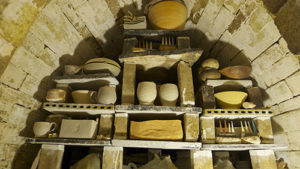
Potter Inês Antonini’s anagama kiln. Source: http://www.inesantonini.com.br/sobre/
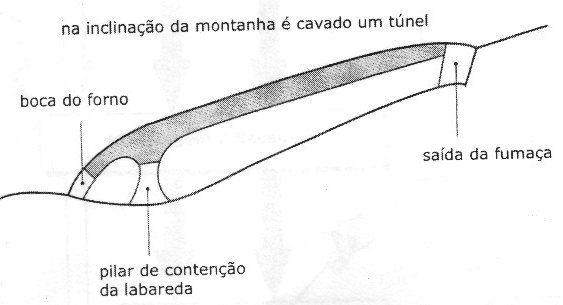
Schematic section of a typical noborigama kiln. Source: 日本美術図解事典. 東京美術
Noborigama
Introduced to Japan from the Korean peninsula in the late 16th century CE, this kiln, like the anagama, is built on sloping ground. Its Japanese name combines the words for climbing and kiln. The firebox is installed at the lowest point, with a succession of firing chambers extending uphill. As firing progresses, the chambers heat one after another. Wood is fed into both the firebox and the chambers. When the desired temperature is reached in one chamber, firing moves to the next, continuing until the whole kiln has been fired.
In Brazil, Cunha, in São Paulo State, has many kilns of this type. I published a post about the kiln used by potters Suenaga and Jardineiro here .
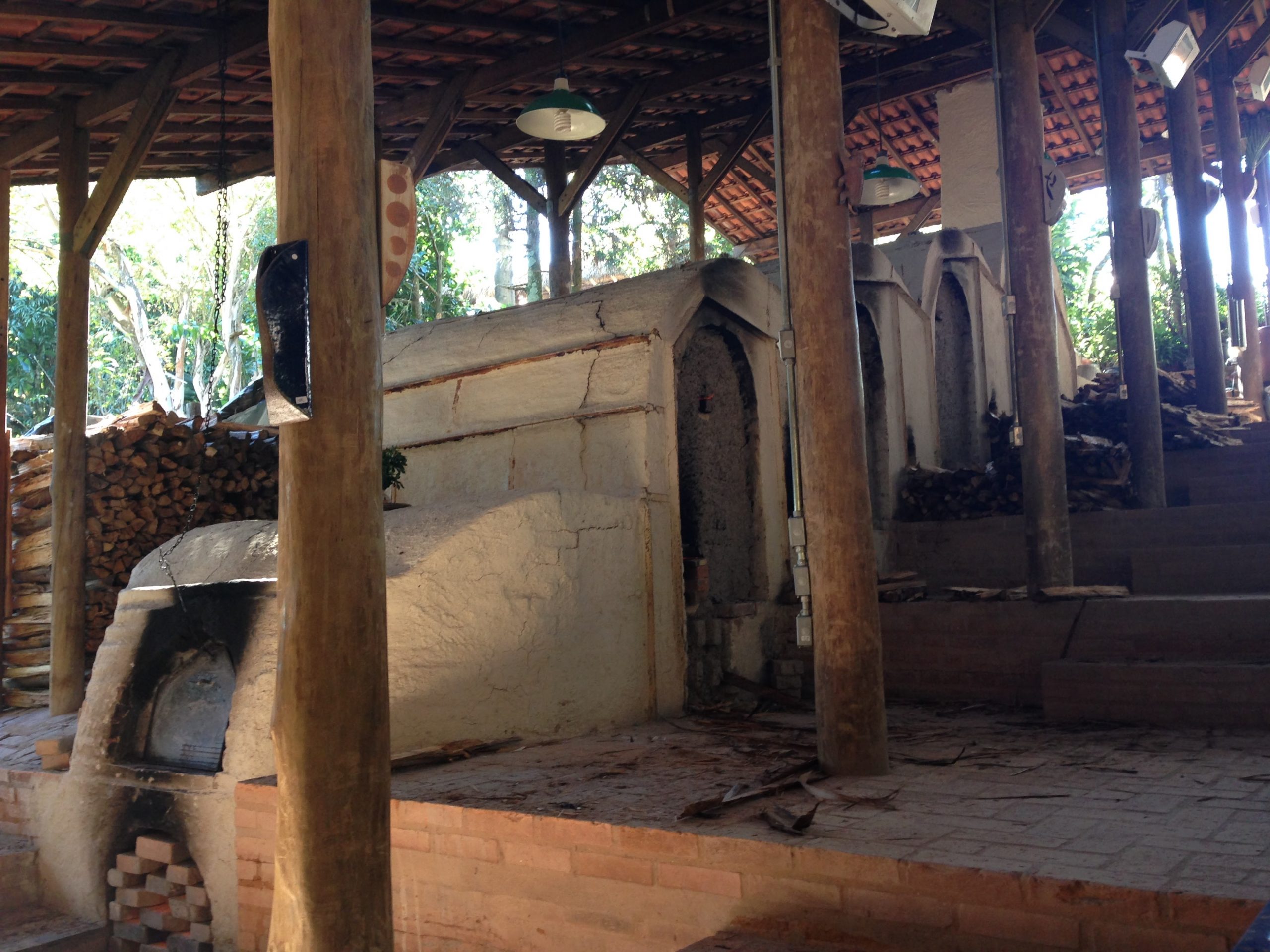
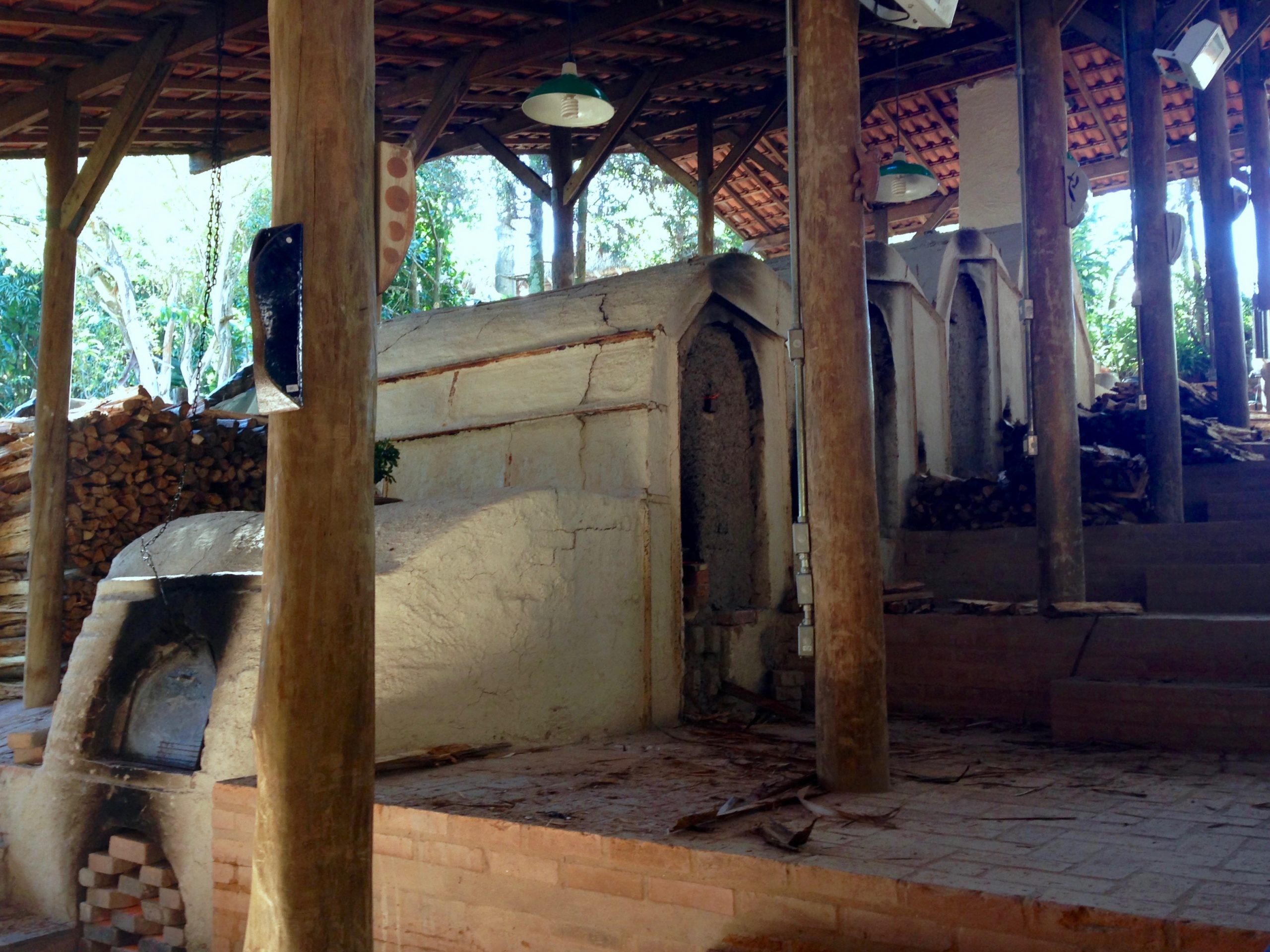
The noborigama kiln at the Suenaga and Jardineiro studio in Cunha
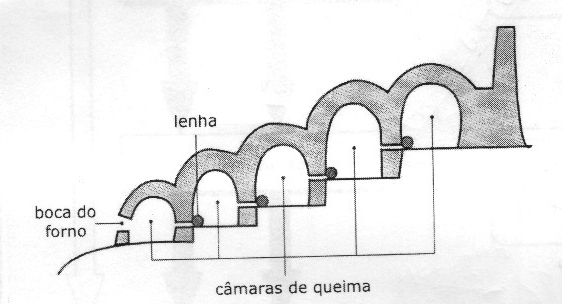
Schematic section of a noborigama kiln. Source: 日本美術図解事典. 東京美術
Kingama Kiln
This traditional kiln was used to fire painted overglaze decoration and was also known as an uwa-e-gama. Small in size, it fixed the decoration in a third firing. To prevent flames from touching the pieces directly, it had two barriers, one outer and one inner. Pieces were closely stacked inside the cylindrical kiln, with combustion taking place outside. Firing was rapid and reached relatively low temperatures of 700–800°C. The diagram below illustrates a basic kiln model built in Saga Prefecture, Japan, from the mid-1940s to the mid-1960s.
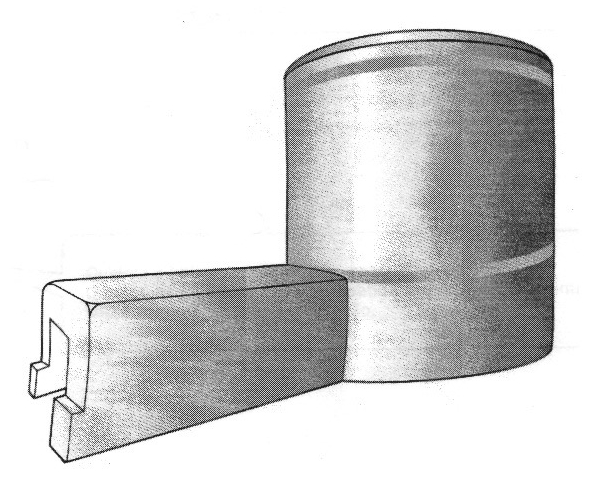
A typical kingama kiln. Source: 日本美術図解事典. 東京美術
I hope you enjoyed it! Until next time!
About the Author: Gustavo Assis

Related Posts

Gostaria de projeto de forno para queima de produtos artesanais.
Bom dia,gostaria muito de projetos para fornos ?acima descritos
É possível um forno caseiro à gás em um quintal na cidade? Ou à lenha.
Olá Rejane. É possível sim. Atenção entretanto para a fumaça emitida pelos fornos à lenha. A vizinhança pode reclamar. E no caso do forno à gás os maçaricos fazem barulho quando estão trabalhando em altas temperaturas.
Oi Gustavo, tô gostando do seu blog…vc teria uma indicação de site que disponibilize um projeto de forno pequeno que chegue pelo menos até 1240 graus? Valeu ;)
ps.: Pode ser um livro também heheh pra eu adquirir…e também qual livro sobre fabricação de esmaltes vc me indicaria pra média temperatura? Valeu
Tem um projeto de forno no livro do Nils Lou “The Art of Firing”. Para a temperatura que você mencionou, recomendo o livro de John Britt, “The Complete Guide to Mid-Range Glazes”.